
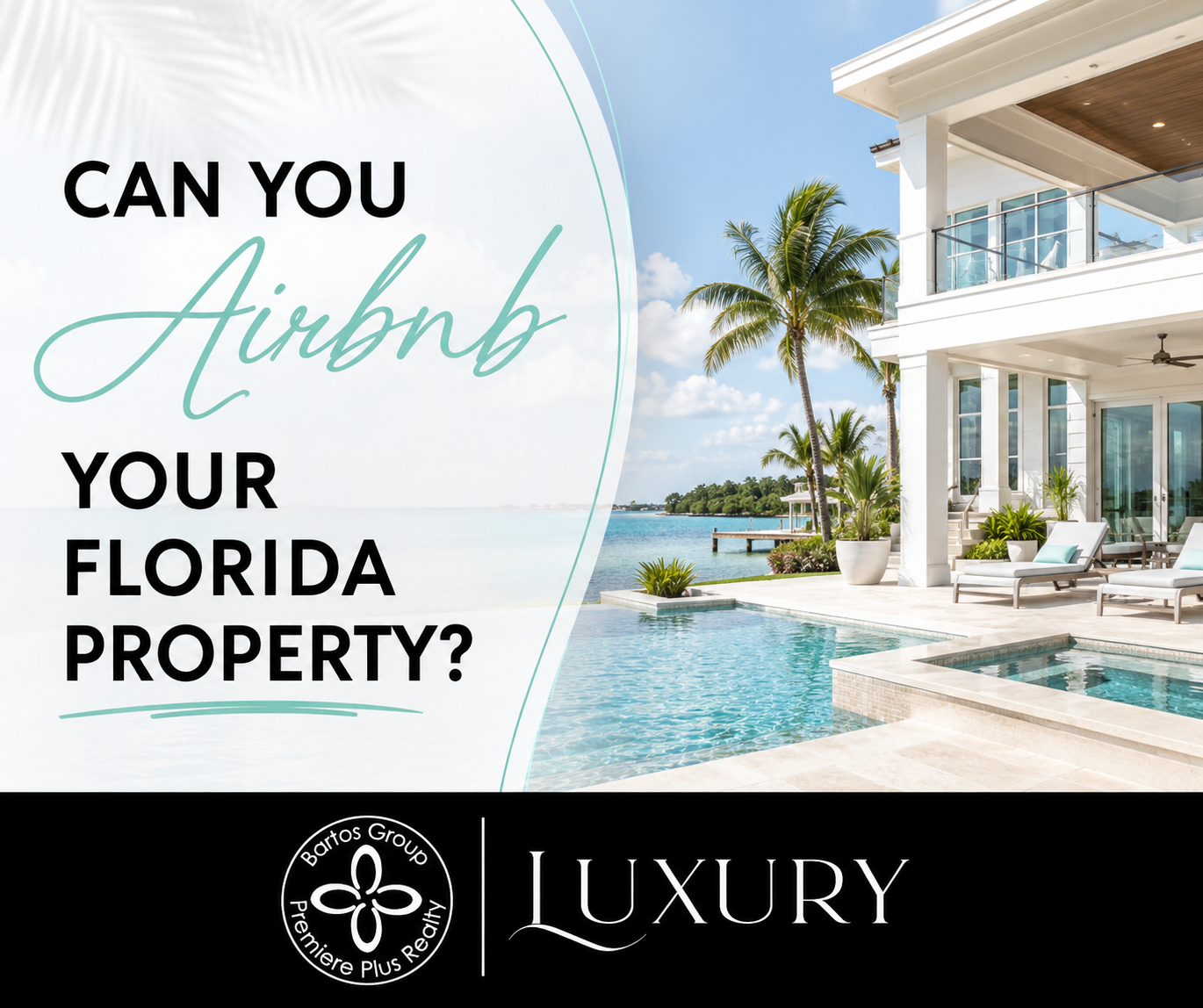
One of the most common questions buyers ask when purchasing real estate in Southwest Florida is simple. “Can I Airbnb this property?”
Strong tourism, beautiful beaches, and waterfront living drive year-round demand. Naples, Marco Island, Bonita Springs, Estero, Fort Myers, and Cape Coral continue attracting investors interested in short-term rental income.
But the answer isn’t always simple.
Florida remains relatively friendly toward vacation rentals compared to many other states. Even so, buyers need to understand important rules and restrictions. Financial considerations matter too, before purchasing a property intended for Airbnb or short-term rental use.
Here’s what buyers should know in 2026.
Know The Rules Before You Buy With Bartos Group
Florida Generally Allows Short-Term Rentals
One reason Florida remains so attractive for investors: the state generally supports vacation rental activity.
Florida law limits how aggressively local governments can prohibit short-term rentals in many cases. This is especially true for properties already operating under existing regulations.
That legal framework has helped make Florida one of the country’s strongest vacation rental markets.
However, that doesn’t mean every property can automatically operate as an Airbnb without restrictions.
HOA and Condo Rules Matter the Most
One of the biggest mistakes buyers make: assuming city or state approval automatically means short-term rentals are allowed.
In reality, HOA and condo association rules are often the biggest deciding factor.
Many communities throughout Southwest Florida have restrictions involving:
- Minimum lease periods
- Rental frequency limits
- Approval requirements
- Occupancy rules
- Guest registration requirements
For example, some condo buildings may require 30-day minimum rentals. Others may allow only a few leases per year. Certain communities prohibit short-term rentals entirely.
Before purchasing, buyers should carefully review HOA documents, condo association rules, community bylaws, and rental policies. This step is critical.
Different Cities Have Different Rules
Florida supports vacation rentals overall. Even so, local municipalities may still regulate operational aspects of short-term rentals.
Depending on the city or county, regulations may involve:
- Registration requirements
- Noise ordinances
- Parking regulations
- Occupancy limits
- Safety requirements
Rules can vary between Naples, Marco Island, Fort Myers, Cape Coral, and Bonita Springs. Buyers should always verify local regulations before purchasing an investment property.
Waterfront and Beach Properties Often Perform Best
In Southwest Florida, short-term renters typically seek lifestyle experiences.
Properties that often perform strongest include waterfront homes, beachfront condos, and pool homes. Gulf-access properties, updated luxury properties, and homes near beaches or downtown districts round out the list.
Vacation renters prioritize outdoor living, pools and lanais, boating access, walkability, and coastal design. Lifestyle appeal heavily influences rental demand and pricing potential.
Seasonality Is Extremely Important
Southwest Florida’s short-term rental market is highly seasonal.
Peak rental demand typically occurs during January, February, March, and early spring. This seasonal demand can create strong rental income opportunities.
However, slower periods often occur during late summer, early fall, and peak hurricane season.
Buyers should carefully evaluate seasonal occupancy, cash flow fluctuations, off-season carrying costs, and insurance expenses. Successful Airbnb investing in Florida requires realistic year-round financial planning.
Insurance Costs Can Be Higher for Vacation Rentals
One major expense many investors underestimate: insurance.
Short-term rental properties often require specialized insurance policies and liability coverage. Flood insurance and windstorm coverage often come into play too.
Waterfront and coastal properties may carry especially high insurance costs because of hurricane exposure, flood zones, and coastal weather risks. Insurance expenses can significantly impact profitability.
Furnished Properties Are Usually Necessary
Most Florida vacation rentals operate as furnished properties.
This means investors often need to budget for furniture, décor, kitchenware, linens, outdoor furniture, and TVs and electronics.
Turnkey furnished properties are extremely popular because they let owners begin renting immediately. Furnishing a property properly can still represent a substantial upfront investment.
Know The Rules Before You Buy With Bartos Group
Property Management Is a Major Consideration
Managing a successful Airbnb requires much more than simply listing a property online.
Owners must coordinate guest communication, cleaning services, maintenance, pricing adjustments, check-in procedures, hurricane preparation, and emergency issues.
Many investors hire professional vacation rental managers, but management fees reduce overall profitability. Self-management may save money but requires far more involvement.
Luxury Vacation Rentals Continue Performing Strongly
Southwest Florida remains one of the country’s strongest luxury vacation rental markets.
Luxury renters continue seeking waterfront estates, resort-style pools, boat docks, high-end interiors, beach access, and outdoor entertaining spaces.
Luxury vacation homes in Naples and Marco Island often attract affluent seasonal visitors. These renters are willing to pay premium rates for exceptional properties.
Cash Flow Is Not the Only Goal for Many Investors
Many Florida vacation rental investors aren’t solely focused on maximizing short-term cash flow.
Some buyers purchase properties because they want a future retirement home or personal seasonal use. Others are after long-term appreciation, lifestyle investment, or a family legacy property.
Rental income often becomes a way to offset ownership costs rather than the sole purpose of ownership.
Not Every Property Makes a Good Airbnb
One of the biggest mistakes investors make: assuming any Florida property will automatically succeed as a short-term rental.
Strong-performing properties usually share excellent location and updated condition. Attractive outdoor spaces, strong lifestyle appeal, nearby attractions, and beach or waterfront access round out the picture.
Poorly positioned properties may struggle despite being located in Florida.
Buyers Should Understand Local Competition
Southwest Florida has strong short-term rental demand — but also significant competition.
Buyers should evaluate comparable rental inventory, occupancy trends, seasonal demand patterns, local pricing trends, and guest expectations.
Properties with better presentation, updated design, resort-style amenities, and strong photography often outperform competing listings substantially.
Tax and Licensing Requirements Exist
Florida vacation rental owners may need to comply with state licensing requirements and tourist tax collection. Sales tax reporting and local registration requirements often apply too.
Investors should work with qualified professionals regarding tax planning, accounting, and licensing compliance. Proper setup matters for long-term success.
Final Thoughts: Yes, But Research Matters
Yes — many Florida properties can legally operate as Airbnb or short-term rentals.
However, successful investing requires understanding HOA restrictions, local regulations, insurance costs, seasonality, maintenance responsibilities, and market demand.
The best-performing properties usually combine strong location, lifestyle appeal, outdoor living, professional management, and realistic financial planning.
Are you considering a beachfront condo in Naples or a waterfront vacation home on Marco Island? Or maybe an investment property in Cape Coral or Fort Myers? Doing proper research before purchasing is essential.
Are you considering buying, selling, investing, or relocating to Southwest Florida real estate? The team at the Bartos Group can help you navigate the market. Expect trusted local expertise and personalized guidance every step of the way.
Know The Rules Before You Buy With Bartos Group
FAQ
Can you legally Airbnb a property in Florida?
Generally yes. Florida law limits how aggressively local governments can prohibit short-term rentals. Still, HOA and condo association rules are often the biggest deciding factor for any specific property.
Do all Southwest Florida cities have the same short-term rental rules?
No. Rules can vary between Naples, Marco Island, Fort Myers, Cape Coral, and Bonita Springs. Buyers should always verify local regulations before purchasing an investment property.
Why is seasonality important for Airbnb investing in Florida?
Peak rental demand typically occurs from January through early spring. Slower periods often hit during late summer, early fall, and hurricane season. Successful investing requires realistic year-round financial planning.
Does insurance cost more for a vacation rental property?
Often, yes. Short-term rental properties may require specialized insurance, liability coverage, and flood or windstorm coverage. Waterfront and coastal properties typically carry the highest costs.
Is every Florida property a good fit for Airbnb?
No. Strong-performing properties usually share excellent location, updated condition, attractive outdoor spaces, and beach or waterfront access. Poorly positioned properties can still struggle despite being located in Florida.