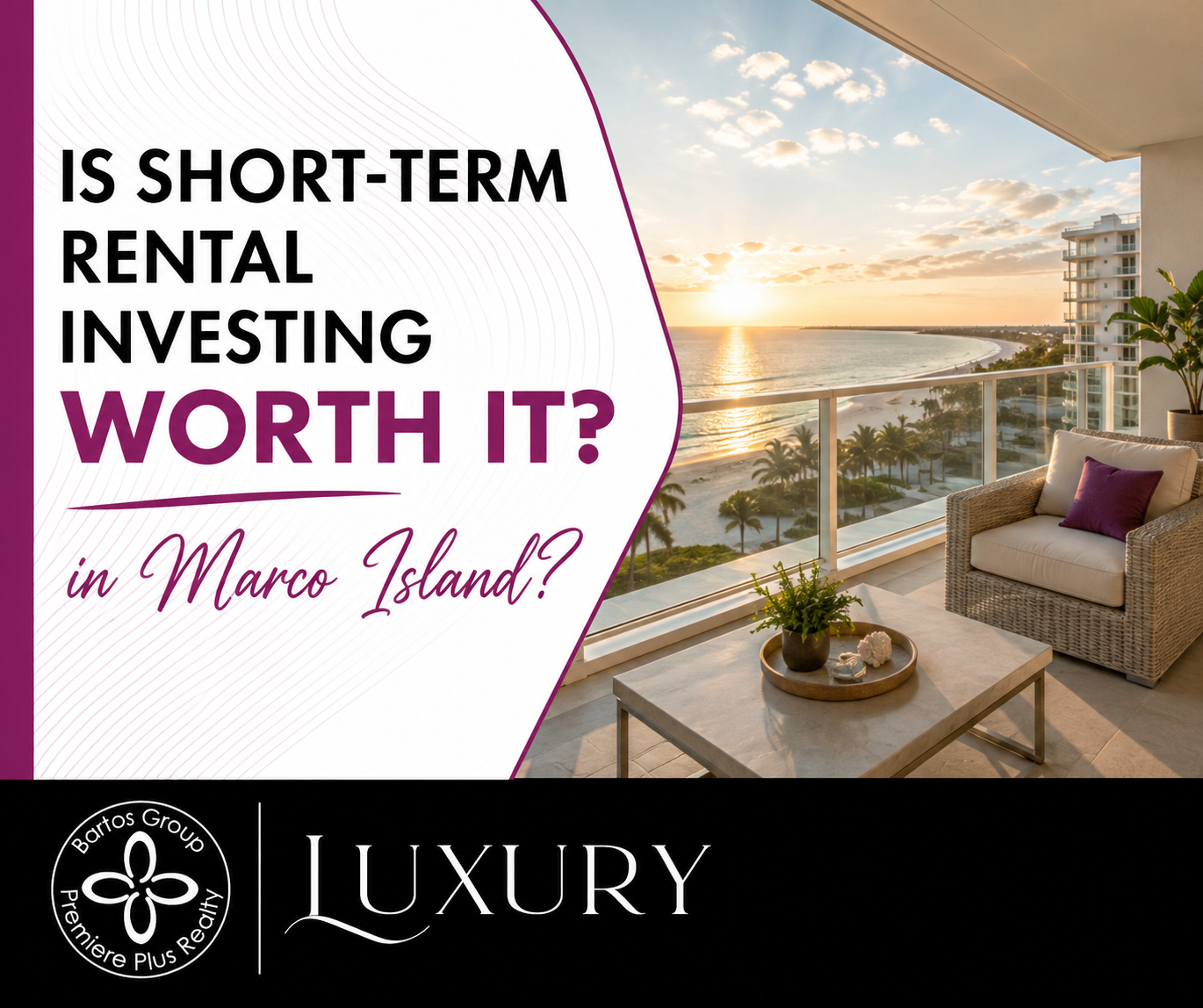
Marco Island has long been one of Southwest Florida’s most desirable vacation destinations. In 2026, it remains one of the most talked-about markets for short-term rental investing.
White-sand beaches and Gulf-access boating define the island. Luxury waterfront homes, a resort-style atmosphere, and strong seasonal tourism round out the appeal. It’s easy to understand why investors continue exploring vacation rental opportunities here.
But is short-term rental investing in Marco Island actually worth it?
The short answer: it can be. Success depends heavily on property selection, regulations, and operating costs. Seasonality and investor expectations matter just as much.
Here’s what buyers and investors should know before purchasing a short-term rental property on Marco Island.
Find Your Investment Property With Bartos Group
Marco Island Continues Attracting Strong Vacation Demand
One of the biggest advantages of Marco Island short-term rentals is consistent tourism demand.
Marco Island remains highly attractive for snowbirds and families. Boating enthusiasts, beach vacation travelers, and luxury seasonal renters flock here too.
The market continues benefiting from Southwest Florida’s strong migration and tourism trends, according to Rabbu.
Marco Island maintains occupancy levels above Florida’s statewide average, per Rabbu, with strong seasonal demand during winter and spring months.
For many investors, that demand is the foundation of the investment opportunity.
Seasonality Is Extremely Important
One thing investors must understand: Marco Island is highly seasonal.
Peak rental season typically occurs during January, February, March, and early spring.
March is often the highest-performing month for vacation rental revenue on the island, according to Rabbu.
However, slower periods can occur during late summer, early fall, and peak hurricane season.
This means successful investors must plan carefully for seasonal cash flow swings and vacancy periods. Maintenance timing, insurance, and carrying costs need attention too.
Many first-time investors underestimate how dramatically seasonal fluctuations can affect annual income.
Waterfront and Pool Homes Usually Perform Best
On Marco Island, the strongest-performing vacation rentals are often waterfront homes and Gulf-access properties. Pool homes, updated luxury condos, and larger family-oriented properties round out the list.
Vacation renters on Marco Island typically expect pools and outdoor living space. Updated interiors, beach proximity, and waterfront lifestyle amenities matter too.
Pools are nearly universal among successful rentals on the island, according to Rabbu.
Properties lacking key vacation-style amenities may struggle to compete.
Larger Homes Can Generate Higher Revenue, But Come With Tradeoffs
Larger luxury homes on Marco Island can produce substantial rental income potential.
Some larger vacation properties generate significantly higher annual revenue than smaller units, per Rabbu.
However, larger homes also often involve higher purchase prices and increased insurance costs. More maintenance, larger cleaning expenses, and lower occupancy percentages in slower seasons add up too.
Investors should carefully evaluate revenue potential, operating expenses, occupancy consistency, and long-term maintenance obligations.
Higher gross income does not always mean stronger net profitability.
Condo Restrictions Are Extremely Important
One of the biggest mistakes short-term rental investors make on Marco Island: failing to review condo and HOA restrictions carefully.
Many condo communities impose rules regarding minimum rental periods and rental frequency. Approval requirements and guest policies matter too.
Some buildings may heavily restrict short-term rentals altogether, according to AgentsGather.
Before purchasing any condo investment property, buyers should thoroughly review HOA documents, rental rules, association financials, and upcoming assessments. This step is critical.
Florida’s Regulatory Environment Still Supports STR Activity
Florida remains generally favorable toward short-term rental operations compared to many other states, according to Avantio.
Marco Island currently allows short-term rentals. Statewide Florida law also limits how aggressively local governments can prohibit them outright, per Avalara.
However, investors still need to comply with state licensing requirements and tax obligations. DBPR regulations and local operational rules apply too.
Rules can evolve over time, so investors should always stay informed regarding regulatory changes.
Find Your Investment Property With Bartos Group
Insurance Costs Are a Major Factor
One of the biggest financial considerations for Marco Island investors is insurance.
Because Marco Island is coastal, waterfront-heavy, and hurricane-exposed, insurance costs can be substantial.
Investors should carefully evaluate flood insurance and windstorm coverage. Liability insurance and vacation rental-specific policies matter too.
Insurance costs can dramatically affect cash flow calculations and overall ROI.
Waterfront Properties Often Hold Strong Long-Term Appeal
Even beyond rental income, many investors are attracted to Marco Island because of long-term waterfront value potential.
Waterfront inventory is naturally limited.
Many buyers view Marco Island real estate as a lifestyle investment and a long-term appreciation asset. A future retirement property or legacy family home fits too.
Some investors are willing to accept lower short-term cash flow. They believe strongly in the long-term desirability of Marco Island waterfront property.
Management and Maintenance Matter More Than Many Investors Expect
Short-term rentals require active management.
Owners must handle guest communication and cleaning coordination. Maintenance, pricing optimization, hurricane preparation, and turnover scheduling round out the workload.
Many investors hire professional vacation rental management companies. This adds additional costs that must be factored into profitability.
Homes with strong presentation, updated interiors, and excellent guest experience often outperform competing listings. Professional photography helps too.
Marco Island Is a Premium Lifestyle Market, Not a “Cheap Cash Flow” Market
One important reality investors should understand: Marco Island is not typically considered a low-cost, high-cash-flow market.
Property values on the island are relatively high compared to many vacation rental destinations, according to Rabbu.
This means investors are often balancing premium purchase prices with strong lifestyle demand. Long-term appreciation potential and seasonal revenue performance factor in too.
Many buyers invest in Marco Island because they want personal enjoyment and luxury lifestyle. Future retirement flexibility and rental income offset matter too, rather than purely maximizing short-term yield.
The Right Property Matters More Than Ever
Not every Marco Island property performs equally as a short-term rental.
Successful vacation rentals often share strong location and pool and outdoor living. Updated coastal design, waterfront or beach proximity, and family-friendly layouts help too. Positive guest experience potential rounds out the list.
Investors who carefully select the right property and manage it strategically tend to position themselves much more successfully long-term.
Final Thoughts: Is Marco Island Short-Term Rental Investing Worth It?
For many investors, yes. Success requires realistic expectations and careful planning.
Marco Island remains attractive because it offers strong vacation demand and luxury waterfront lifestyle. Limited inventory, long-term desirability, and strong seasonal tourism round out the appeal.
However, investors must also carefully evaluate insurance costs and seasonality. HOA restrictions, maintenance expenses, regulatory requirements, and cash flow expectations deserve attention too.
Are you seeking a blend of lifestyle, long-term property ownership, and vacation rental potential? Marco Island continues standing out as one of Southwest Florida’s most desirable coastal investment markets.
Are you considering buying, selling, investing, or relocating to Marco Island or anywhere in Southwest Florida? The team at the Bartos Group can help you navigate the market. Expect trusted local expertise and personalized guidance every step of the way.
Find Your Investment Property With Bartos Group
FAQ
Is short-term rental investing worth it on Marco Island?
For many investors, yes, but success depends on property selection, regulations, operating costs, and seasonality. Realistic expectations and careful planning matter more than chasing quick cash flow.
What time of year performs best for Marco Island vacation rentals?
Peak season runs January through early spring, with March often the highest-performing month for rental revenue. Late summer, early fall, and hurricane season tend to be slower.
Do all Marco Island condos allow short-term rentals?
No. Many condo communities impose rules on minimum rental periods and frequency, and some buildings restrict short-term rentals altogether. Reviewing HOA documents before purchasing is essential.
What type of property performs best as a Marco Island vacation rental?
Waterfront homes, Gulf-access properties, and pool homes tend to perform strongest. Vacation renters typically expect pools, outdoor living space, and updated interiors.
Is Marco Island a high cash-flow investment market?
Not typically. Property values run relatively high compared to other vacation rental destinations. Many buyers invest for lifestyle and long-term appreciation rather than pure short-term yield.