
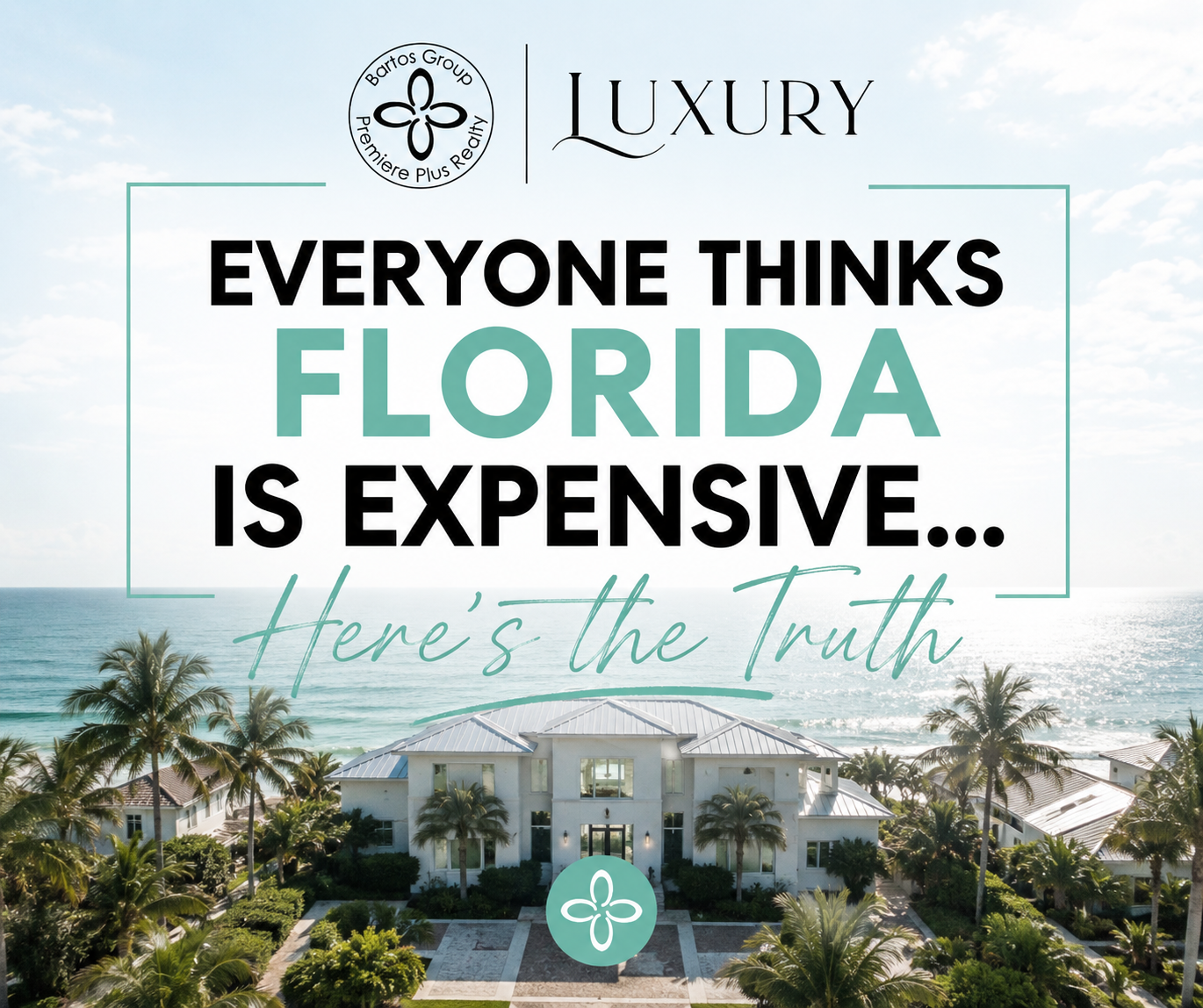
Everyone says Florida is expensive. And honestly, there’s some truth to that.
Home prices have risen. Insurance costs have increased. Luxury markets throughout Southwest Florida have exploded in popularity.
But the story is more nuanced than the headlines suggest. While some parts of Florida have become incredibly expensive, many buyers still see tremendous value.
That’s especially true in Naples, Marco Island, Bonita Springs, Estero, Fort Myers, and Cape Coral.
Here’s the truth about the real cost of living in Florida in 2026, one myth at a time.
Find Your Florida Value With Bartos Group
Myth 1: Saying Florida Is Expensive Everywhere Misses the Facts
First, let’s start with reality. Certain Florida markets absolutely command premium pricing today.
Luxury coastal areas like Naples, Marco Island, Palm Beach, and Miami Beach have seen enormous demand. Retirees, remote workers, luxury buyers, investors, and relocation buyers all want in.
Waterfront homes and Gulf-front condos are especially competitive because inventory is limited and waterfront land is scarce. Lifestyle demand also remains extremely strong.
But Florida is not one price. Communities throughout Southwest Florida vary dramatically in home pricing, HOA fees, insurance costs, and lifestyle offerings.
Naples and Marco Island tend to command luxury pricing. Estero and Bonita Springs may offer stronger value per dollar.
Meanwhile, Fort Myers and Cape Coral often provide more attainable entry points. Punta Gorda and inland communities may offer even greater affordability.
As a result, buyers willing to expand their geographic search often discover more opportunity than expected.
Myth 2: Florida Is Expensive Only If You Insist on the Water
Waterfront luxury living is expensive almost everywhere, so that’s not unique to Florida.
In Southwest Florida, buyers pay premiums for Gulf access, beach proximity, boating lifestyle, walkability, luxury amenities, and waterfront scarcity.
That’s simply premium coastal real estate economics.
However, buyers who move slightly inland, consider condos, or explore emerging communities can still find strong value.
Also, condos and villas can help. Many buyers choose them for beach proximity, amenities, lower maintenance, and seasonal flexibility.
They avoid the carrying costs of a massive waterfront home.
Myth 3: Tax Savings Settle Whether Florida Is Expensive
One of Florida’s biggest financial advantages is that there is no state income tax.
That means Florida does not tax wages, retirement income, Social Security, pension income, or state-level investment income. That’s according to Kiplinger.
For retirees, business owners, high-income earners, and remote workers, this can create massive long-term savings.
However, taxes alone don’t settle the question. Costs like insurance and HOA dues belong in the math too.
Myth 4: The Mortgage Is the Real Cost
One of the biggest truths about Florida is that ownership costs extend far beyond the mortgage payment.
Insurance is where Florida has become noticeably more expensive. Homeowners insurance, flood insurance, and HOA costs have climbed because of hurricanes, storm exposure, rising rebuilding costs, and coastal risk.
Also, buyers can check a property’s flood zone with the FEMA Flood Map Service Center.
Therefore, buyers should budget for homeowners insurance, flood insurance, HOA dues, maintenance reserves, utilities, and taxes.
Instead of focusing only on purchase price, the smartest buyers focus on total monthly ownership cost.
Find Your Florida Value With Bartos Group
Myth 5: Florida Is Expensive Compared With Other Coastal Markets
Compared to many luxury coastal markets nationwide, Southwest Florida may still offer relatively strong value.
For example, buyers may still find larger homes, better amenities, waterfront access, and resort-style communities. Pricing may be lower than comparable luxury coastal markets in California, the Northeast, and Hawaii.
Many buyers relocating from high-tax states also compare Florida with New York, New Jersey, Illinois, California, Connecticut, and Massachusetts.
Compared to many of those states, Florida may still offer lower taxes, a lower overall cost burden, and larger homes.
Myth 6: Demand Will Cool Off Soon
One reason Florida is expensive in certain markets is simple. People still strongly want to live there.
Southwest Florida continues attracting retirees, families, remote workers, investors, luxury buyers, and seasonal residents.
As a result, that demand continues supporting long-term desirability throughout the region.
How the Equation Changes by Buyer Type
Whether Florida feels expensive depends heavily on who is buying.
For retirees, no state income tax on retirement income, Social Security, and pensions can help offset higher ownership costs.
Remote workers and business owners, meanwhile, often benefit from the same tax advantage while gaining outdoor living and lifestyle flexibility.
Families relocating from high-cost states may gain larger homes and better weather. Seasonal buyers, however, often prefer condos and villas for lock-and-leave flexibility.
So the same Florida can feel expensive to one buyer and like a bargain to another.
Questions to Ask Before Deciding Florida Is Expensive
First, which communities have you actually compared? Many buyers who believe Florida is expensive only look at prime beachfront properties, luxury golf communities, and waterfront estates.
Second, how flexible can you be? Location, property type, distance from the beach, and community style can also change the price dramatically.
Third, have you priced the full ownership picture? Insurance, flood insurance, HOA fees, maintenance, utilities, and taxes all belong in the comparison.
Finally, what lifestyle are you getting for the money? That answer matters more than the sticker price alone.
The Better Question: What Lifestyle Are You Getting for the Money?
The real question isn’t “Is Florida expensive?” The better question is what lifestyle the money actually buys.
For many buyers, Florida offers better weather, a better lifestyle, tax advantages, outdoor living, wellness, flexibility, and retirement appeal.
In fact, many people are willing to pay more to eliminate harsh winters and enjoy outdoor living daily. Improving wellness and spending more time with family matter too.
Southwest Florida’s year-round outdoor living, beaches and boating, golf communities, resort-style amenities, waterfront dining, and warm winters all contribute.
That broader lifestyle value is why demand remains so strong.
Final Thoughts: Yes, Florida Is Expensive in Places, But Not Everywhere
Yes, some Florida markets have become expensive. But Florida is not one-size-fits-all.
Southwest Florida still offers a wide range of opportunities depending on budget, lifestyle priorities, flexibility, property type, and location preferences.
In the end, buyers who explore different communities, consider condos or villas, and move slightly inland often discover tremendous opportunity.
Are you considering buying, selling, investing, or relocating anywhere in Southwest Florida? The team at Bartos Group can help you navigate the market. Expect trusted local expertise and personalized guidance.
Find Your Florida Value With Bartos Group
FAQ: Why People Say Florida Is Expensive
Why do people say Florida is expensive?
Home prices and insurance costs have risen, and luxury markets have grown in popularity. However, the story varies by community.
Where is Florida most expensive?
Luxury coastal areas like Naples, Marco Island, Palm Beach, and Miami Beach command premium pricing. Waterfront and Gulf-front properties are especially competitive.
Does Florida have a state income tax?
No. Because Florida does not tax wages, retirement income, Social Security, or pension income, many buyers see major long-term savings.
What cost has increased the most?
Insurance. Homeowners insurance, flood insurance, and HOA costs have climbed because of storm exposure and rebuilding costs.
How can buyers find better value in Florida?
Stay flexible on location, property type, and distance from the beach. Also, compare total monthly ownership cost, not just purchase price.