
National real estate numbers are helpful, but they never tell the whole story. That’s especially true in Southwest Florida, where Naples, Marco Island, Fort Myers, and Cape Coral can move differently from the rest of the country.
The August 2026 market update points to a market becoming more balanced nationally, while many Southwest Florida segments are tightening again. Buyers still have opportunities, particularly through concessions and new construction, but waiting for a perfect interest rate could mean missing the conditions available right now.
Get The Local Numbers From Bartos Group
Inventory Is Growing Nationally, but Every Market Is Different
Nationally, new listings rose 2.4% year over year in June, closing out the strongest spring listing season since 2022. More homeowners are choosing to list, which is a healthy development after years of extremely limited supply.
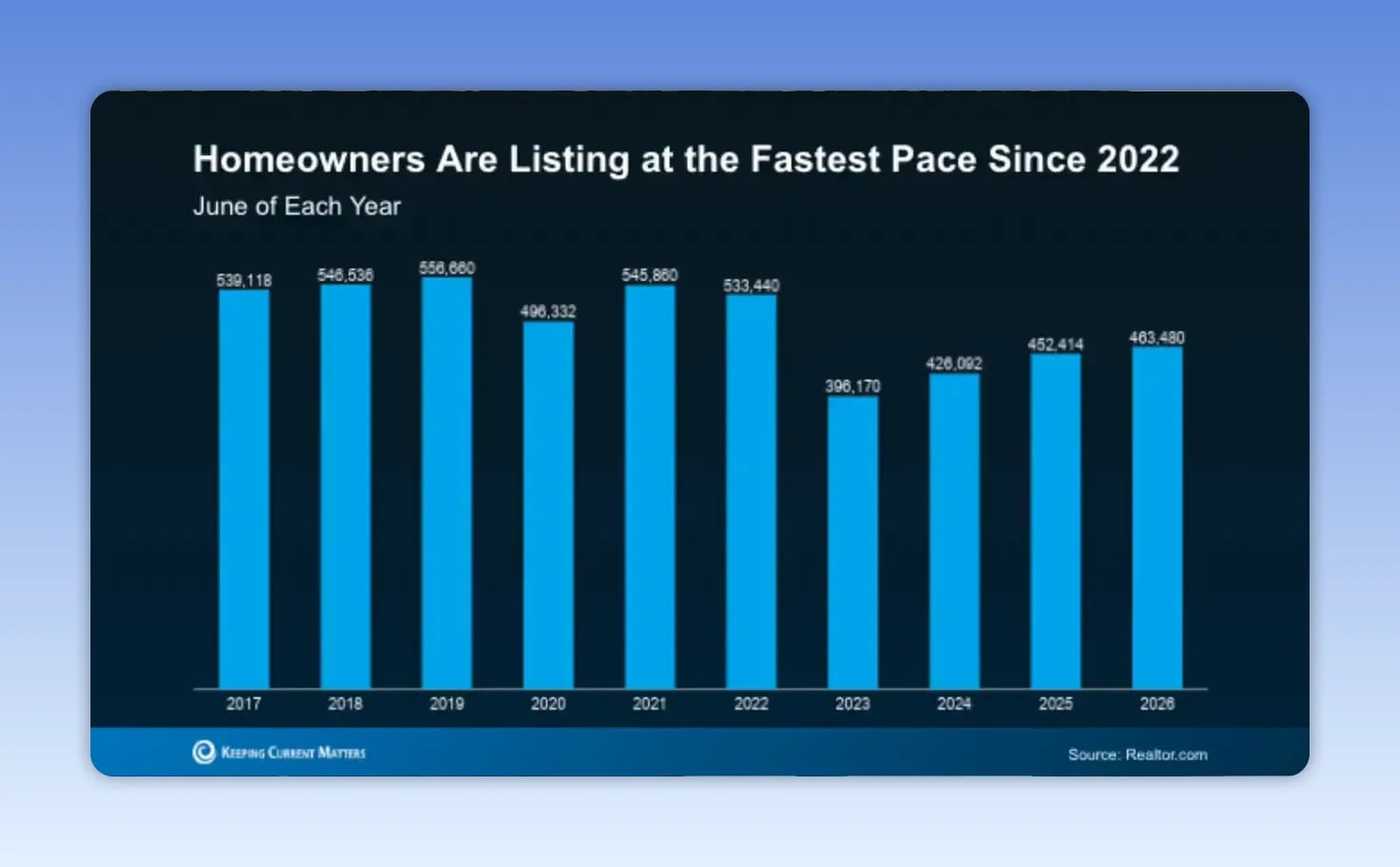
That said, real estate isn’t one big national market. The Northeast and Midwest remain the most supply-constrained regions, even as they post some of the strongest inventory growth. Meanwhile, areas that led the inventory recovery are beginning to tighten again.
Southwest Florida has its own rhythm. Florida isn’t easily summarized as simply “the South.” Demand patterns, seasonal ownership, condominium inventory, coastal lifestyle, insurance considerations, and local migration all shape conditions here.
In condominium communities, one straightforward way to understand supply is to compare the number of units for sale with the total number of units in the building. When the share available falls below 5%, inventory is getting tight. That’s a meaningful indicator for both buyers and sellers because it affects negotiating leverage and the speed at which well-priced homes move.
Locally, inventory is selling. Even through the traditionally slower summer period, new listings continue coming to market, yet available supply has been tightening in several areas. That can create a more balanced market, but it can also create competition when a desirable property is priced correctly.
National Asking Prices Are Falling, but Southwest Florida Prices Are Holding
Affordability remains top of mind. In the second quarter of 2026, 29% of buyers said rising home prices were their biggest concern. That concern makes sense, particularly when mortgage rates remain elevated compared with the unusually low-rate years.
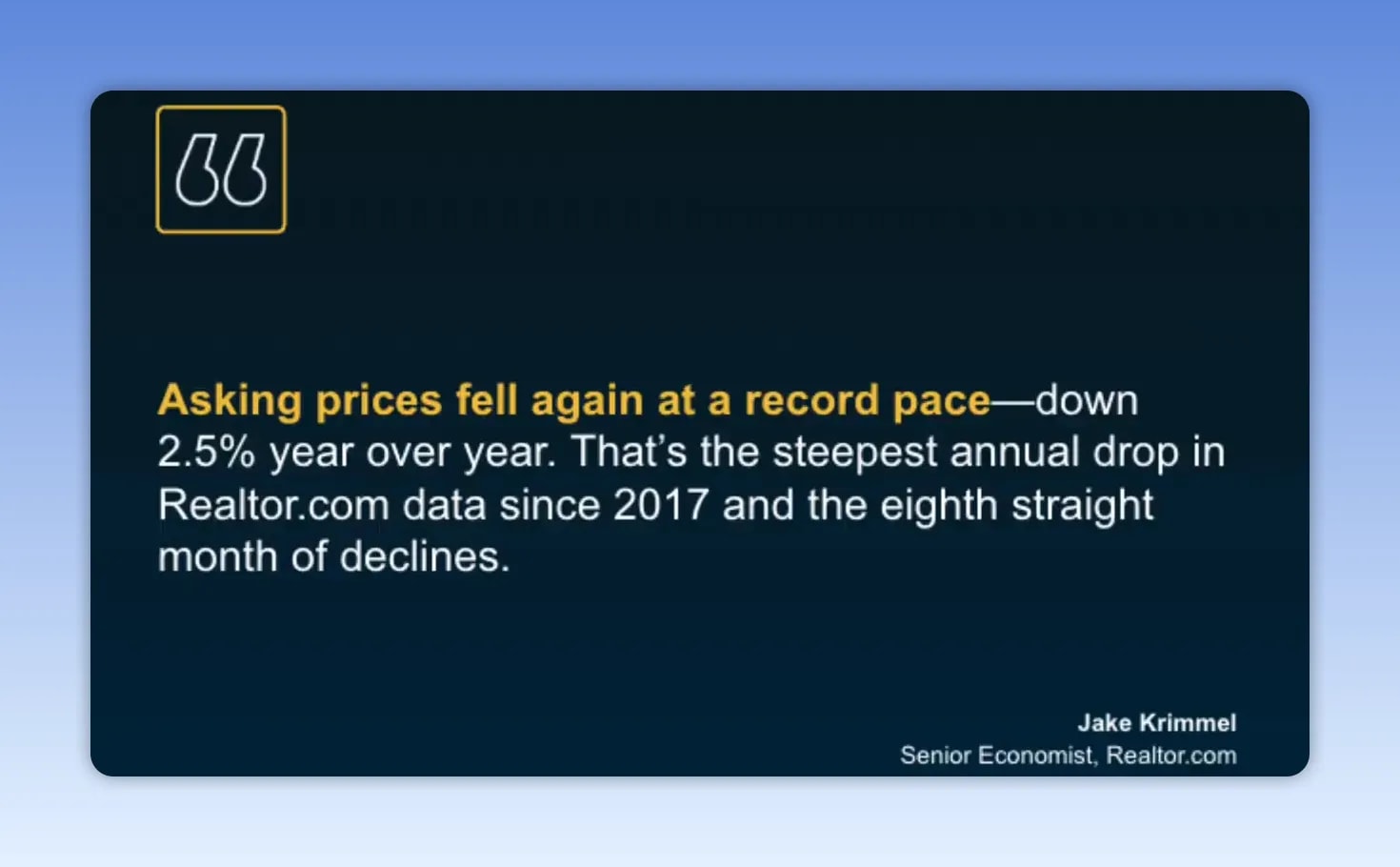
National data from Realtor.com showed asking prices down 2.5% year over year, the steepest annual drop in its data since 2017 and the eighth straight month of declines. Sellers across many markets are adjusting to a slower, steadier environment. Instead of listing high and reducing later, more are beginning with a price that attracts serious buyers from day one.
Still, a national average isn’t a local pricing strategy. Southwest Florida isn’t seeing the same widespread downward movement. July average sales prices across the four local markets examined were either higher year over year or essentially stable. Nothing in that local comparison was down.
This doesn’t mean a seller can name any price and expect a quick sale. It means accurate positioning matters. Sellers who read current conditions, understand competing inventory, and price with intention give themselves the best opportunity to get attention quickly.
There’s also important perspective in the national price numbers. The typical national median listing price rose substantially during the surge from 2021 through 2022. A pullback from roughly $449,000 to around $430,000 may feel significant, but it doesn’t erase all the appreciation that occurred before it. Markets can correct, stabilize, and still retain years of prior value growth.
The lower price tiers are showing more softness and have also experienced stronger growth in listing activity. That creates opportunity for buyers who stay prepared and act when the right home appears. In recent weeks, multiple-offer situations have still occurred on both the listing and buying sides. A functioning market isn’t a market with no competition — it’s a market where well-priced homes and well-prepared buyers can come together.
Mortgage Rates: Plan for Today, Not for a Perfect Forecast
Mortgage rates continue to carry a lot of emotional weight. Many buyers still define a “good” mortgage rate as anything below 5%. In fact, 63% hold that view, while 37% don’t consider rates good until they’re back in the 3% range.
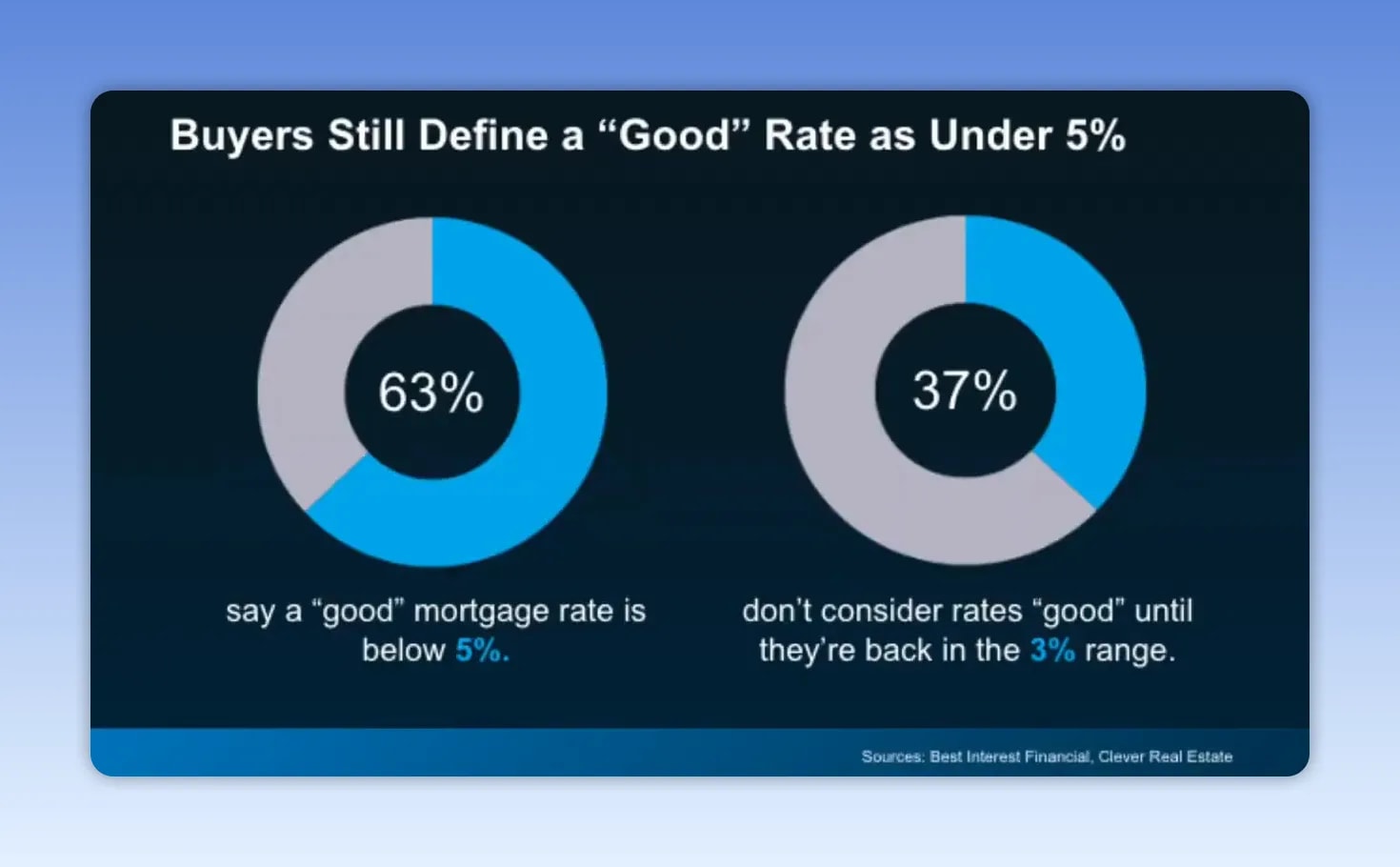
Those expectations are understandable, but they aren’t necessarily realistic. Mortgage rates haven’t reached the 5% range in years, and the long-term average over the past 45 years sits in the 7% range. The ultra-low rates of the recent past were exceptional, not the normal baseline.
About four in 10 buyers expect rates to fall below 5% this year. Yet forecasts have been calling for a move into the fives for several years, and it hasn’t happened. A larger group expects rates to average between 5% and 7%, while another group anticipates rates at 7% or higher.
The practical approach is simple: don’t build a buying strategy around a rate drop that may not come. Major mortgage forecasts from organizations such as the Mortgage Bankers Association, Wells Fargo, and Fannie Mae suggest relatively stable rates ahead unless something significant changes.
Rates are a tool. They go up and down. If rates improve after a purchase, refinancing may become an option. Until then, focus on what’s affordable now and how to use the available tools to improve the overall deal.
New Construction and Seller Concessions Create Real Opportunity
Builders are actively managing inventory. New construction listings saw price reductions at a higher rate than existing homes in the second quarter, reflecting softer demand in some new-build segments and a willingness by builders to move standing inventory.
That means buyers shouldn’t overlook new construction. A builder may be more motivated to reduce a price, offer closing-cost assistance, provide upgrades, or otherwise structure an attractive package when the goal is to move available inventory off the books.
Concessions are another important affordability tool. Nationally, roughly half of sellers offered concessions. In local experience, the majority of buyers are receiving some form of concession when they ask and when the transaction supports it.
Concessions can help with closing costs, prepaid expenses, repairs, or other negotiated needs. They aren’t guaranteed, and they depend on the property, the seller, the offer strength, and local competition. But longer days on market than 2020, 2021, and 2022 have made many sellers more open to a productive conversation.
The takeaway isn’t to make an unreasonable offer. It’s to recognize that buyers have more tools today than they did during the frenzy years. A thoughtful strategy can be far more valuable than sitting on the sidelines waiting for a headline to change.
Get The Local Numbers From Bartos Group
What July’s Southwest Florida Numbers Are Showing
July numbers reinforced the difference between national headlines and local conditions. Average sales prices across the Southwest Florida markets reviewed were up or stable year over year. At the same time, the number of homes for sale showed notable reductions, confirming tighter available inventory.
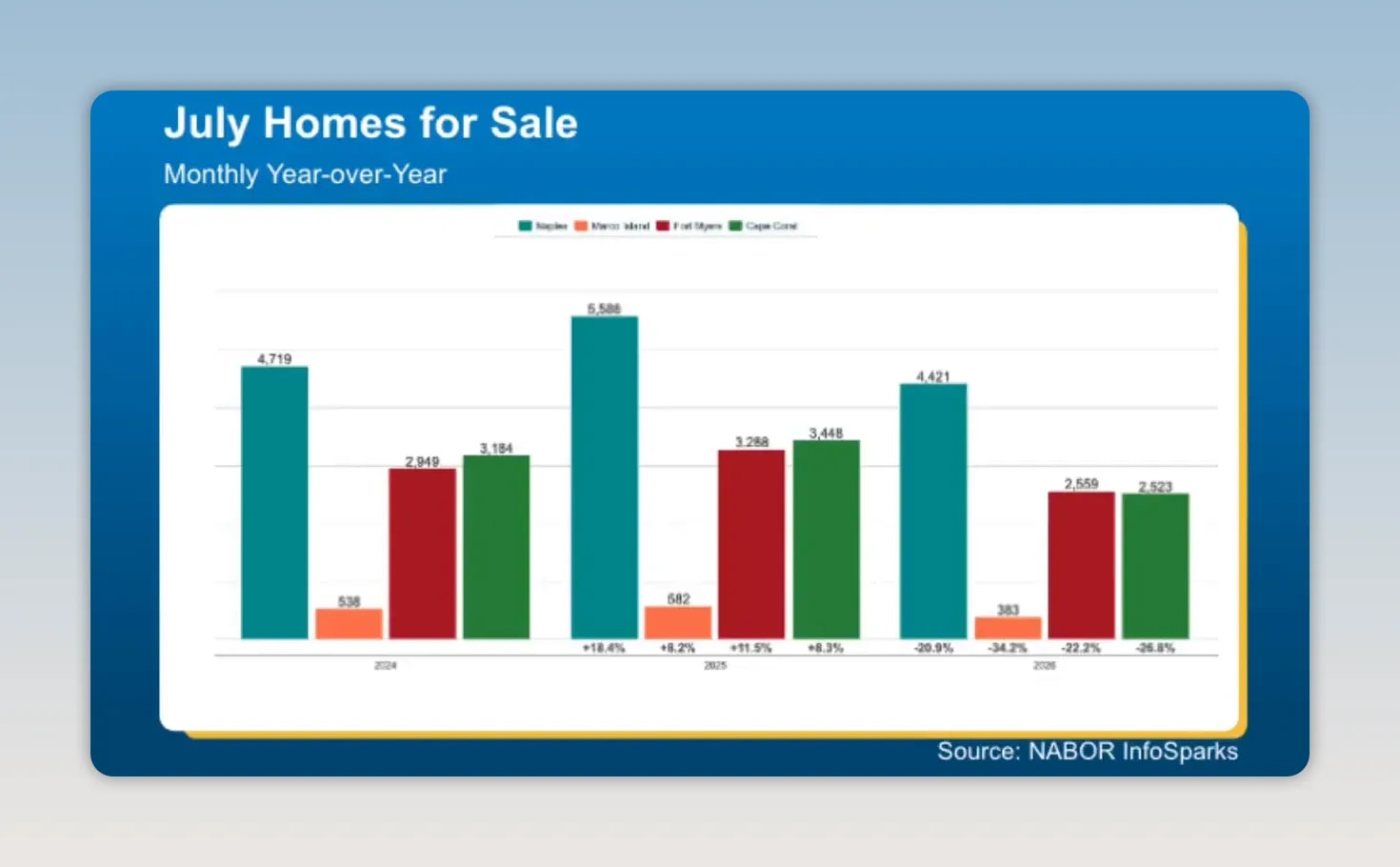
For someone considering a move to Naples or Marco Island, current local supply deserves far more attention than a national average. Buyers can browse Naples homes for sale or explore Marco Island homes for sale to get a clearer sense of active competition in the areas that matter to them.
There’s also a possible policy consideration on the horizon: a significant reduction or elimination of property taxes has been discussed as a potential reason some people may want to buy sooner rather than later. That’s not a reason to rush into the wrong home, but it’s one of several local factors worth considering as plans take shape.
Buying Versus Renting: Equity Matters
Renting can feel easier because maintenance concerns stay with the property owner. Sometimes the monthly cost of renting and owning can even appear close on paper. But there’s a major difference between the two.
With rent, each monthly payment goes out the door. With homeownership, part of a mortgage payment can build equity over time. It’s a form of forced savings that happens gradually, often without the owner noticing it month to month.
That equity can grow through principal reduction and home appreciation. Over time, it may create flexibility to move, downsize, relocate, or pursue the next stage of life. Owning a home does involve expenses and responsibilities, but it also creates an asset that renting doesn’t.
There’s no universal answer. The right move depends on finances, timing, lifestyle, and the property itself. But for a first-time buyer or someone relocating within Southwest Florida, it’s worth looking beyond the monthly payment and considering the long-term value of ownership.
Make Decisions With Local Data and a Clear Strategy
The August 2026 message is straightforward: national trends matter, but local conditions decide the outcome. Inventory is tightening in parts of Southwest Florida. Local prices are holding steady or rising. Concessions and builder opportunities can support affordability. And mortgage rates should be treated as a current planning factor, not a reason to wait endlessly.
Buyers need a realistic budget, a clear understanding of available financing, and a strategy for competing when the right home comes along. Sellers need pricing that reflects current competition and a willingness to use the right terms to get a deal across the finish line.
That’s what a healthy, functioning market looks like. It’s not frantic. It’s not frozen. It’s a market where good information and a solid plan can make all the difference.
If you’re considering buying, selling, investing, or relocating to Southwest Florida real estate, the team at the Bartos Group is here to help you navigate the market with trusted local expertise and personalized guidance.
Get The Local Numbers From Bartos Group
FAQ
Are national real estate statistics useful for Southwest Florida buyers and sellers?
They provide context, but local inventory, pricing, and demand in Naples, Marco Island, Fort Myers, and Cape Coral are more important for a specific decision.
Are home prices falling in Southwest Florida?
The July market comparison discussed here showed average local sales prices were either up year over year or largely stable, rather than declining.
Should buyers wait for mortgage rates to fall below 5%?
Waiting for a particular rate is risky because forecasts remain uncertain. Buyers should focus on what’s affordable today and consider refinancing if rates improve later.
Can buyers still ask sellers for concessions?
Yes. Many sellers are offering concessions, particularly when a property has spent longer on the market or when terms help make a strong offer work.
Why might new construction offer a good deal right now?
Builders are actively managing available inventory and may offer price reductions or other incentives to move completed or near-completed homes.