
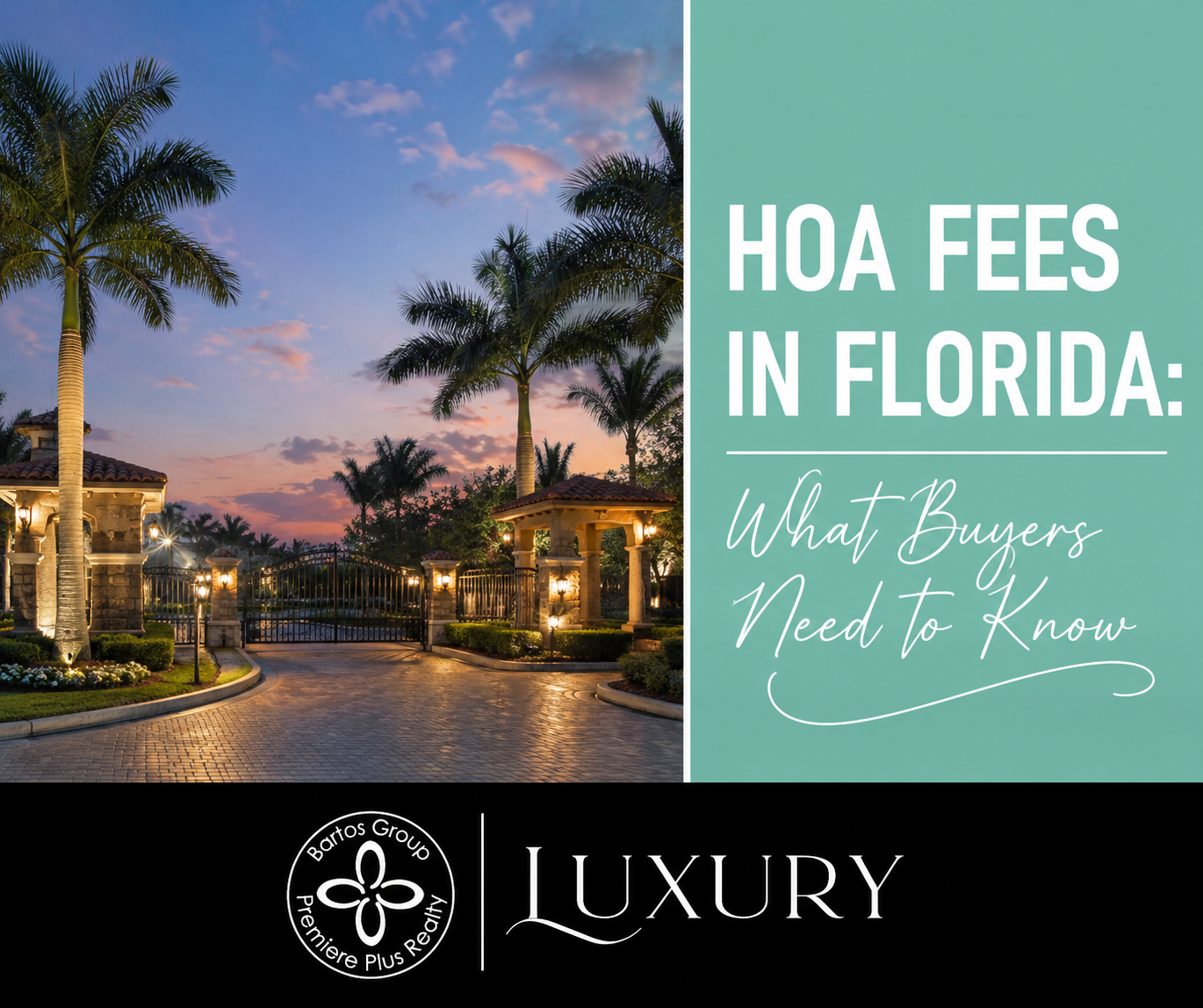
If you’re buying a home or condo in Southwest Florida, there’s a very good chance you’ll encounter an HOA. In communities throughout Naples, Marco Island, Bonita Springs, Estero, Fort Myers, and Cape Coral, many neighborhoods include homeowners associations, condo associations, master-planned community fees, and club memberships.
HOA communities can offer incredible amenities and lifestyle benefits, but many buyers don’t fully understand what HOA fees actually cover, why fees vary so much, how rising insurance costs are affecting dues, or what financial risks buyers should evaluate before purchasing.
Here’s what buyers should know about HOA fees in Florida in 2026.
Understand HOA Costs Before You Buy — the Bartos Group
What Is an HOA?
An HOA, or Homeowners Association, is an organization that manages and maintains a residential community. HOAs are common throughout Florida because many communities are designed around shared amenities, resort-style living, common landscaping, private roads, gated entrances, and community standards.
Depending on the neighborhood, HOA structures may manage single-family communities, condo buildings, townhomes, golf communities, and master-planned developments.
What HOA Fees Typically Cover
One of the biggest misconceptions buyers have is that HOA fees are simply “extra costs.” In reality, many Florida HOA fees cover substantial services and amenities.
Depending on the community, HOA fees may include landscaping, irrigation, exterior maintenance, roof maintenance, security gates, community pools, clubhouses, fitness centers, tennis and pickleball courts, cable and internet, building insurance, pest control, and water and sewer in condos.
Luxury communities may also include resort-style amenities, beach access, marina facilities, concierge services, and wellness centers. The level of service varies dramatically depending on the community.
Condo HOA Fees Are Usually Higher
Condo communities often carry higher HOA fees than single-family neighborhoods because associations may maintain building exteriors, roofs, elevators, common hallways, pools and spas, structural systems, landscaping, and master insurance policies.
Luxury high-rise buildings especially may have substantial monthly fees because operating costs run significantly higher. In many cases, condo owners are essentially paying for a resort-style, maintenance-free lifestyle.
Florida HOA Fees Have Been Rising
One major trend buyers should understand: HOA fees throughout Florida have increased significantly in recent years. Rising insurance premiums, storm-related maintenance, increased labor costs, higher utility expenses, new reserve funding requirements, and building repair projects are driving these costs higher.
Especially in condo communities, many associations are increasing reserves and maintenance funding following updated Florida safety regulations. As a result, buyers should expect HOA fees to continue evolving over time.
Low HOA Fees Aren’t Always a Good Thing
Many buyers assume lower HOA fees automatically mean a better deal. But extremely low dues can sometimes signal underfunded reserves, deferred maintenance, future special assessment risks, or poor long-term financial planning.
A well-managed association with healthy reserves may actually provide better long-term financial stability than a poorly funded community with artificially low dues. Buyers should evaluate the association’s overall financial health, not simply the monthly fee amount.
Buyers Should Review Reserve Funds Carefully
One of the most important things buyers should review is reserve funding. Reserve funds are savings associations maintain for major future expenses such as roof replacement, exterior painting, elevator modernization, structural repairs, pool resurfacing, and road resurfacing.
Associations with weak reserves may eventually require large special assessments, emergency fee increases, or deferred repairs. Reviewing reserve studies and financial statements matters tremendously before purchasing.
Understand HOA Costs Before You Buy — the Bartos Group
Special Assessments Can Be Significant
A special assessment is an additional charge owners may need to pay beyond normal monthly dues. Assessments often occur because of major repairs, storm damage, structural upgrades, reserve shortages, or insurance increases.
Especially in older Florida condo buildings, special assessments can become substantial. Buyers should always ask whether the community has had recent assessments, whether future assessments are expected, and what major projects are upcoming.
Golf Communities Often Include Additional Fees
Many Southwest Florida golf communities involve HOA fees, club memberships, food minimums, golf dues, and social memberships. Some communities include bundled golf memberships, while others require separate club memberships entirely.
Buyers should carefully understand mandatory versus optional memberships, annual dues, initiation fees, and transfer fees. The total cost of ownership may extend far beyond the basic HOA fee itself.
Master-Planned Communities Often Have Multiple Fees
Some Florida communities include layered association structures such as a master HOA, a neighborhood HOA, a condo HOA, and club memberships. This means buyers may pay multiple separate fees at the same time — for example, a master community fee, a neighborhood maintenance fee, a condo association fee, and club dues.
Understanding the full ownership structure matters tremendously before purchasing.
HOA Rules and Restrictions Matter Too
HOAs don’t just collect fees — they also enforce community rules. These rules may regulate exterior modifications, landscaping, rental restrictions, parking, pet policies, boat storage, and holiday decorations.
Some buyers appreciate the consistency and maintenance standards, while others may feel overly restricted. Reading HOA documents carefully before buying is extremely important.
Waterfront Communities Often Have Higher Fees
Waterfront and coastal communities often involve higher HOA costs because of storm exposure, flood insurance, marina maintenance, seawall upkeep, elevated insurance costs, and luxury amenity maintenance. This is especially common in Gulf-front condos, marina communities, resort-style developments, and luxury high-rises.
HOAs Can Provide Tremendous Lifestyle Value
Despite rising fees, many buyers still strongly prefer HOA communities because they offer maintenance-free living, resort amenities, security, social atmosphere, landscaping maintenance, and a wellness-focused lifestyle.
For many seasonal residents and retirees, the convenience alone is worth the cost. HOAs often allow owners to enjoy Florida living with far less day-to-day maintenance responsibility.
Buyers Should Evaluate Lifestyle Value, Not Just Price
The key question isn’t simply how high the HOA fees are. The better question is what lifestyle and services you’re receiving in return.
For example, a luxury beachfront condo may include insurance, security, pools, fitness centers, and maintenance. A golf community may include wellness amenities, social clubs, landscaping, and recreation. A bundled community may include golf access itself. The value depends entirely on your lifestyle priorities, how often you use the amenities, and your ownership goals.
HOA Fees Are Part of the Total Ownership Cost
One major mistake buyers make is focusing only on mortgage payments. In Florida, the true monthly ownership cost often includes the mortgage, insurance, flood insurance, property taxes, HOA fees, club memberships, and maintenance.
Buyers should evaluate the full financial picture before purchasing.
Final Thoughts: Understanding HOA Fees Is Critical in Florida
HOA fees are a major part of Florida real estate ownership, especially in Southwest Florida’s resort-style and luxury communities. While rising HOA costs are an important consideration, many associations also provide strong amenities, maintenance convenience, security, lifestyle benefits, and long-term property upkeep.
The key is understanding what the fees cover, the association’s financial health, reserve funding, future assessment risks, and whether the lifestyle matches your goals.
Whether you’re considering a luxury condo in Naples, a golf community in Bonita Springs, a waterfront property on Marco Island, or a master-planned community in Estero, understanding HOA structures is essential for making smart real estate decisions.
If you’re considering buying, selling, investing, or relocating to Southwest Florida, the team at the Bartos Group is here to help you navigate the market with trusted local expertise and personalized guidance.
Understand HOA Costs Before You Buy — the Bartos Group
FAQ
What do HOA fees in Florida typically cover?
HOA fees can cover landscaping, exterior maintenance, security gates, pools, clubhouses, fitness centers, cable and internet, building insurance, and pest control, with luxury communities sometimes including resort-style amenities and concierge services.
Why are condo HOA fees usually higher than single-family HOA fees?
Condo associations often maintain building exteriors, roofs, elevators, structural systems, and master insurance policies, which drives operating costs — and monthly fees — significantly higher than typical single-family HOA dues.
Are low HOA fees always a good sign?
Not necessarily. Extremely low dues can signal underfunded reserves, deferred maintenance, or future special assessment risk. A well-managed association with healthy reserves often provides better long-term financial stability.
What is a special assessment?
A special assessment is an additional charge beyond normal HOA dues, often triggered by major repairs, storm damage, reserve shortages, or insurance increases. Buyers should always ask about recent or upcoming assessments before purchasing.
Why are Florida HOA fees rising in 2026?
Rising insurance premiums, storm-related maintenance, labor and utility costs, and new reserve funding requirements following updated Florida safety regulations are all driving HOA fees higher, especially in condo communities.