One of the biggest problems in real estate mindset is not lead generation, market conditions, or even competition. It is identity. Too many agents are seen as nice, helpful, friendly people, but not as the trusted advisor clients call when real decisions need to be made.
That distinction matters more than most agents realize. Being liked is great. Being remembered as the expert is better. In a business built on referrals, repeat business, and trust, the goal is not just to be in someone’s orbit. The goal is to be the person they think of when anything related to their home comes up.
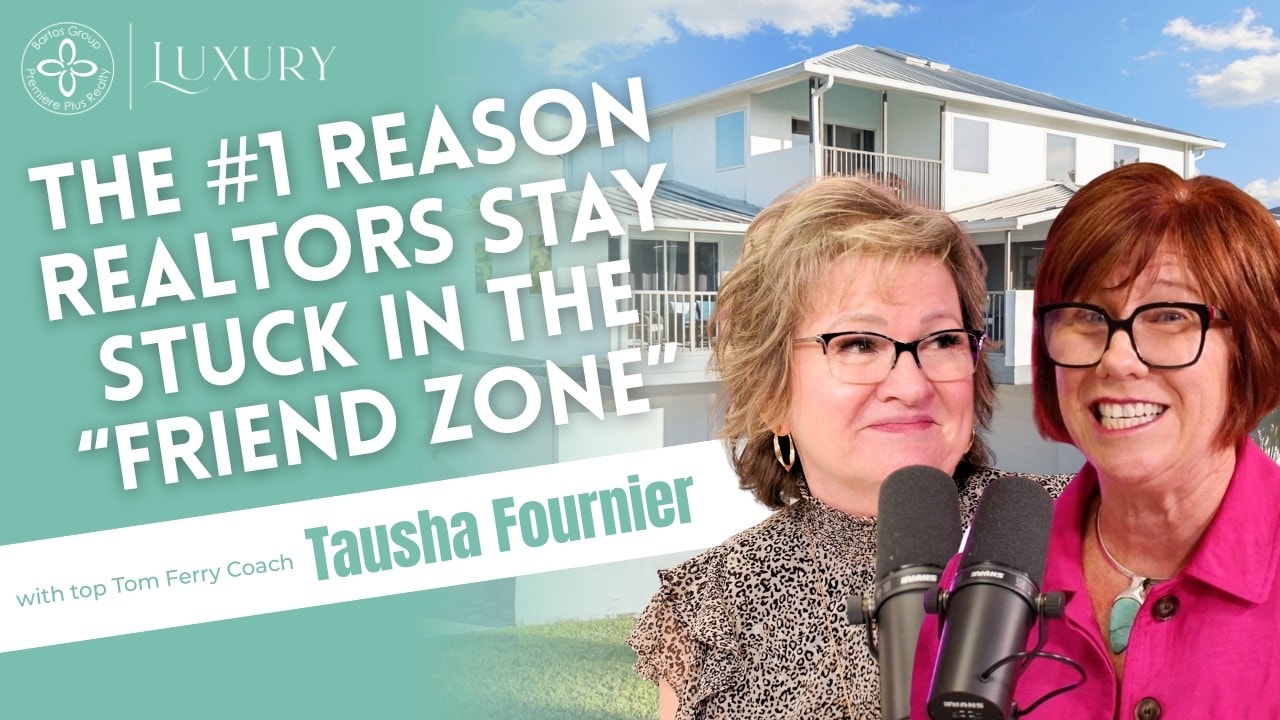
In this conversation, Mary Bartos of The Bartos Group of Premiere Plus Realty and Top Tom Ferry coach Tausha Fournier explain that real estate mindset becomes a business tool, not just a motivational phrase. The agents who grow are the ones who shift from victim thinking to ownership, and from “friendly” to “friendly advisor.”
Stop Being the Friend — Become The Advisor
Why Mindset Drives More Success Than Most Agents Think
Tausha Fournier framed it simply: 85% of success is mindset. That is a big statement, but for anyone in sales, service, or leadership, it rings true. Skills matter. Systems matter. Strategy matters. But if the mind driving those things is stuck in blame, scarcity, or confusion, performance follows it downhill fast.
A strong real estate mindset starts with one core principle: take 100% responsibility. Not because every bad outcome is an agent’s fault, but because responsibility is where power lives. If someone else is always to blame, then someone else also controls the solution.
That is a terrible place to build a business from.
The Fastest Mindset Hack: Ask Better Questions
One of the most practical ideas shared in the conversation was this: when the mind starts spiraling into negativity, change the question.
Most agents do not realize how often they ask themselves questions that reinforce powerlessness. Questions like:
- Why aren’t these leads calling me back?
- Why aren’t my clients loyal?
- Why does my team leader only give me the worst leads?
Those questions sound innocent, but they are dangerous. They push the brain to gather evidence for frustration, resentment, and helplessness. And the brain is very good at that job.
A better real estate mindset comes from reframing those questions into ones that create action:
- Instead of: Why aren’t these leads calling me back? Ask: Why am I relying on cold leads instead of building my sphere of influence?
- Instead of: Why aren’t my clients loyal? Ask: Why haven’t I created a follow-up system that keeps me top of mind?
- Instead of: Why are these leads terrible? Ask: Why am I waiting for someone else to build the business I want?
That shift may sound small, but it changes everything. It moves the mind from complaint to problem-solving. From reaction to design. From victim mode to leadership.
Your Brain Will Look for Proof of Whatever You Believe
Mary Bartos added an important layer to the mindset conversation: the mind is fertile ground. It grows whatever gets planted there.
If an agent keeps repeating, “Nobody calls me back,” the brain starts collecting supporting evidence. Every missed call, every unreturned text, every silent email becomes proof. That thought gets stronger, not weaker.
But when the question changes to, “Why haven’t I created more opportunities for myself?” the brain starts searching in a different direction. It begins noticing opportunities to improve follow-up, reconnect with past clients, strengthen relationships, and create new business.
This is one of the most useful principles in real estate mindset: thoughts create direction. The brain follows the assignment it is given.
This idea is supported broadly in performance psychology and cognitive behavioral work, where reframing thoughts can influence behavior and outcomes.
The Friend Zone Problem in Real Estate
Once mindset is addressed, the next issue becomes visible: many agents are accidentally training clients to see them as thoughtful friends instead of skilled advisors.
This is the real estate version of the friend zone.
It usually looks harmless. An agent remembers birthdays. Drops off pumpkins at Halloween. Checks in casually. Sends warm messages. All of that is nice, and there is absolutely nothing wrong with doing those things.
The problem is what those actions communicate if they are the only actions happening.
Clients may think, “They’re so sweet.” But when it is time to sell a home, appeal an assessment, evaluate timing, understand local pricing, or recommend an agent to a friend, they draw a blank. They do not connect that relationship to real estate expertise.
That is the cost of staying in the friend zone.
The Advisor Zone Is Where Referrals Actually Happen
The better goal is not to stop being warm. It is to become the friendly real estate advisor.
That means staying relational while also consistently delivering relevant, useful, home-centered value. Clients should associate an agent with smart guidance, market awareness, and confident counsel.
In practical terms, that can include:
- Providing annual or quarterly updates on home value
- Sharing market trends that impact a homeowner’s equity
- Explaining local inventory shifts and pricing patterns
- Offering insight on timing, strategy, and long-term property decisions
- Creating a follow-up system that keeps the agent consistently top of mind
When those touchpoints are present, clients stop seeing the agent as someone who simply “keeps in touch” and start seeing them as a source of trusted guidance.
“Don’t just be in the friend zone. Be the friendly real estate advisor they lean into for everything about their home.”
Stop Being the Friend — Become The Advisor
Top of Mind Beats Occasional Contact
One of the most important ideas here is that frequency alone is not enough. Plenty of agents stay in contact. Far fewer stay relevant.
Relevance is what creates top-of-mind awareness.
If someone hears from an agent only on holidays, birthdays, and seasonal pop-bys, the relationship may stay pleasant but shallow. If that same person also gets timely updates about their neighborhood, their property value, and the market forces affecting their biggest asset, the relationship becomes more meaningful and memorable.
This is where real estate mindset and business strategy intersect. An agent has to believe they have the right, and the responsibility, to lead. If they do not own their value, they will hesitate to communicate it.
How Agents Get Stuck
Agents usually get stuck in the friend zone for one of three reasons:
- They confuse kindness with value delivery. Being caring matters, but it is not the same as demonstrating expertise.
- They avoid authority. Some agents worry that acting like an advisor will make them sound pushy, when in reality it makes them useful.
- They lack systems. Even agents with strong intentions fall off if they do not have a repeatable follow-up process.
A healthier real estate mindset helps solve all three. It reminds agents that service includes leadership, expertise, and communication. Clients do not need another casual contact. They need someone who understands what their home means financially and can speak into it with confidence.
A Simple Way to Move From Friend to Advisor
For agents who want a practical reset, the path is straightforward:
- Audit current communication. Is it mostly social, seasonal, and generic?
- Add market-based value. Include home updates, neighborhood changes, and investment-minded insight.
- Build a follow-up system. Consistency beats randomness every time.
- Change internal language. Stop asking questions that create blame and start asking questions that create responsibility.
- Own the role of advisor. Clients benefit when agents show up with clarity and confidence.
Real Estate Mindset Is What Makes Strategy Work
This conversation was not really about whether an agent should be nice. Of course they should. It was about something much deeper: whether they are building a business around intention or around assumption.
Assuming people will remember who to call because the relationship feels warm is risky. Intentionally becoming the trusted expert is far smarter.
The strongest real estate mindset combines two ideas at once:
- I am responsible for creating the business I want.
- I bring meaningful value that clients need.
Put those together and the entire business changes. Follow-up gets sharper. Communication gets clearer. Confidence goes up. Referrals become more natural because clients finally know exactly what the agent stands for.
For those buying or selling in Southwest Florida, The Bartos Group offers local expertise and market guidance grounded in exactly this kind of advisor approach.
Stop Being the Friend — Become The Advisor
FAQ
What does “friend zone” mean in real estate?
It means clients see an agent as kind, approachable, and pleasant, but not necessarily as their go-to expert for real estate decisions. That often leads to missed referrals and lost repeat business.
What is the “advisor zone”?
The advisor zone is when clients think of an agent as both relational and highly knowledgeable. The agent is the person they trust for updates on home value, market trends, and important property decisions.
How does real estate mindset affect business growth?
Real estate mindset affects how agents interpret challenges, ask questions, and take responsibility. A strong mindset leads to better decisions, more consistent action, and a greater sense of ownership over results.
What is one mindset shift agents can make immediately?
Start by changing self-talk. Replace blame-based questions like “Why is this happening to me?” with ownership-based questions like “What can I do differently to create a better outcome?”
Can agents still do personal touches like birthday calls and pop-bys?
Absolutely. Those gestures can strengthen relationships. The key is not to stop there. Personal touches work best when they are paired with relevant market insight and real estate expertise.
How can an agent stay top of mind with past clients?
By using a consistent follow-up system that mixes relationship-building with value-driven communication, such as home value updates, local market changes, and timely advice tied to the client’s biggest asset.