
Southwest Florida’s housing market is giving buyers and sellers something they have not had much of lately. A little breathing room.
Prices across the area look relatively steady, and sales are moving. The local picture is more nuanced than the national headlines about struggling starter homes and hot luxury properties.
The biggest opportunities may begin with homeowners themselves. Many have substantial equity. Buyers looking at Naples, Marco Island, Fort Myers, and Cape Coral are finding very different markets. One community and price range looks different from the next.
Get The Local Numbers With Bartos Group
Home Equity Is Giving Owners More Choices
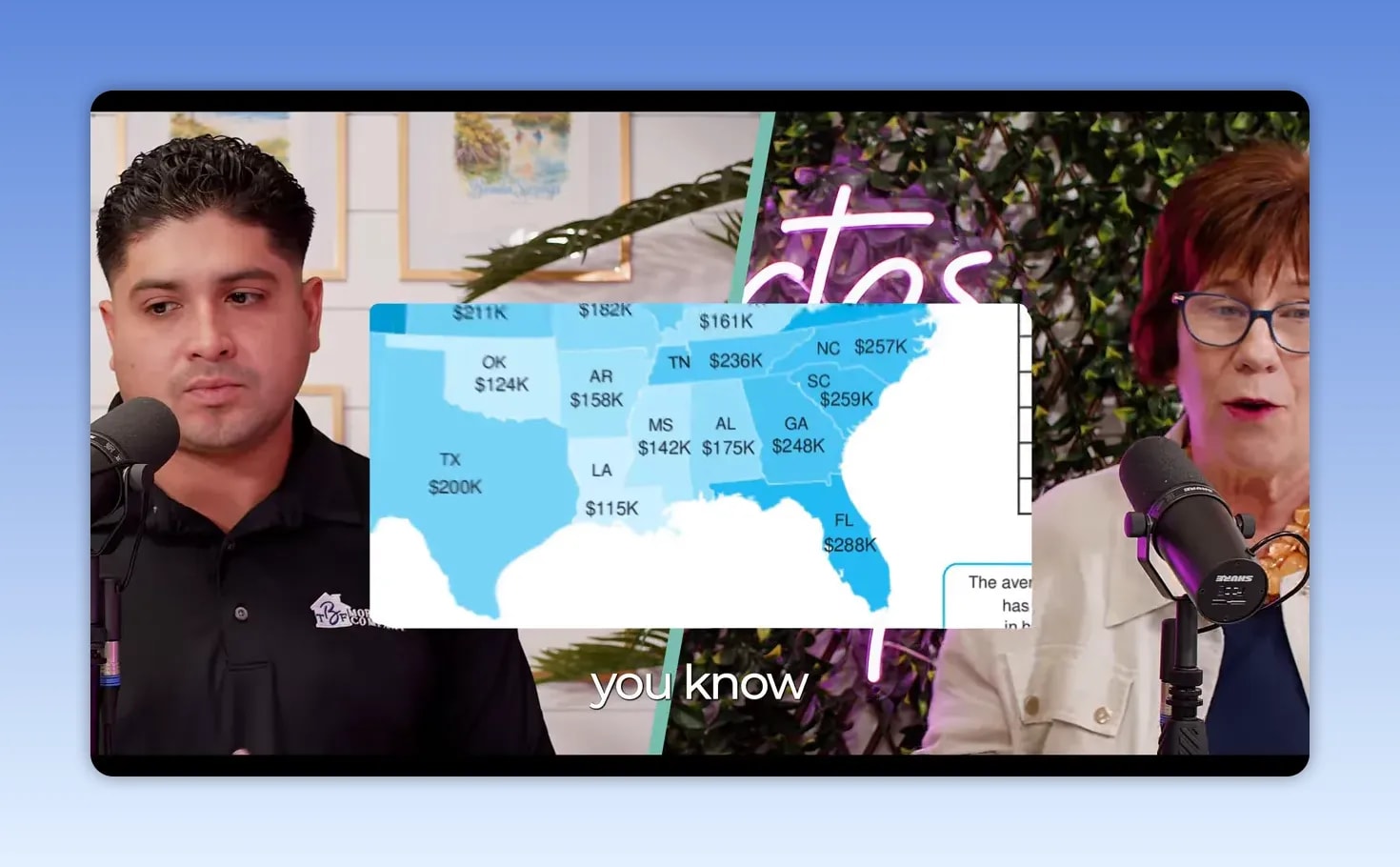
Across 56.7 million U.S. properties, the average borrower has approximately $310,500 in home equity. That is a meaningful cushion.
The state averages vary considerably. California’s figure is about $627,000, while Florida’s is around $288,000.
Neither figure should be treated as a valuation of a particular Southwest Florida home. Naples and Marco Island include higher-priced properties and a substantial second-home market. Many local purchases are made with cash, too.
A statewide average cannot capture every neighborhood or owner’s position. Statewide equity figures provide context, but an individual Southwest Florida property needs its own assessment.
Owners are increasingly putting that equity to work. The first quarter of 2026 saw a 10% increase from the prior quarter in U.S. homeowners accessing their housing wealth.
Someone who secured a low mortgage rate in 2020 or 2021 might consider a home equity line of credit. A HELOC offers a way to borrow against equity without replacing the first mortgage. Home equity loans and cash-out refinances are other possibilities.
Those funds might help with a move to another home, an investment property, or a business expense. A wedding or an emergency reserve could factor in too.
But equity is not free money. Borrowing terms depend on factors including income, credit history, and the home’s market value.
The right question is not just how much an owner could borrow. It is whether the intended use and repayment plan make sense for that household. The Federal Trade Commission’s consumer guidance is a useful starting point. Discuss options with a trusted mortgage or financial adviser from there.
The National Market Is Splitting by Price Point
Nationally, starter homes and luxury homes are telling different stories. Higher-end properties have been selling at a stronger pace. Entry-level homes are spending longer on the market and facing more price cuts.
Sales data by price range also shows greater strength at the high end than at the low end.
It is not hard to see why the pressures differ. Potential first-time buyers are weighing everyday costs, mortgage payments, and uncertainty before making a major commitment. Higher-income households may have more purchasing power supported by investment gains.
That does not mean every luxury listing attracts a bidding war, or that every affordable home sits unsold. It means a single national housing headline can hide a wide divide.
Southwest Florida does not fit neatly into that national starter-home story. Naples and Marco Island have relatively few homes at the very lowest price points. Their mix of vacation properties, second homes, and investments differs from a market dominated by first-time buyers.
Local activity needs to be read on its own terms.
Four Communities, Four Different Sales Mixes
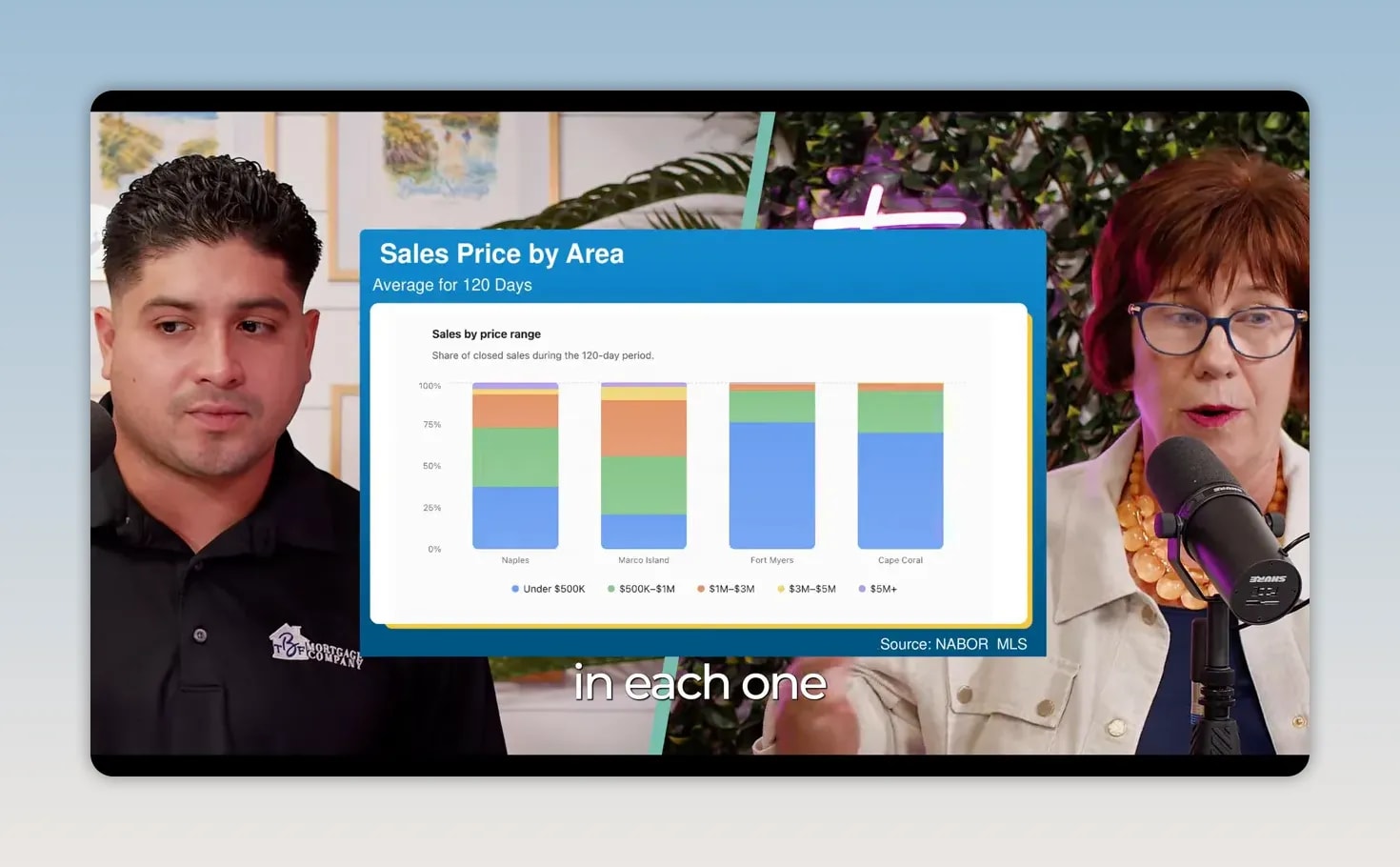
A look at sales over the most recent 120-day period makes the differences clear. In Naples, homes priced below $500,000 represented roughly 30% to 35% of sales. Properties priced at $5 million or more accounted for only about 2%, despite the attention that exceptional luxury sales attract.
Marco Island’s activity is carried largely by the middle-to-upper ranges. That’s $500,000 to $1 million and $1 million to $3 million. Its $5 million-plus segment represented about 1% of sales.
Fort Myers and Cape Coral, by contrast, had a much larger share of transactions below $500,000. Little to no activity showed up in the $5 million-plus category.
The mix of recent sales changes sharply from the second-home markets to Fort Myers and Cape Coral.
That is why price advice must start with the community and the property, not a national average. Fort Myers and Cape Coral look more like primary-residence markets in this comparison. Naples and Marco Island have a stronger second-home and investment component.
Even within one city, a $450,000 home and a $5 million home face different pools of buyers.
Get The Local Numbers With Bartos Group
Days on Market Make Pricing Matter
For sellers, days on market tell an important story. A home that begins at an aspirational asking price can linger. The longer it lingers, the harder it may be to achieve the result the seller originally hoped for.
Starting with a price that reflects what buyers see in comparable properties matters most. That beats testing an ambitious number and waiting.
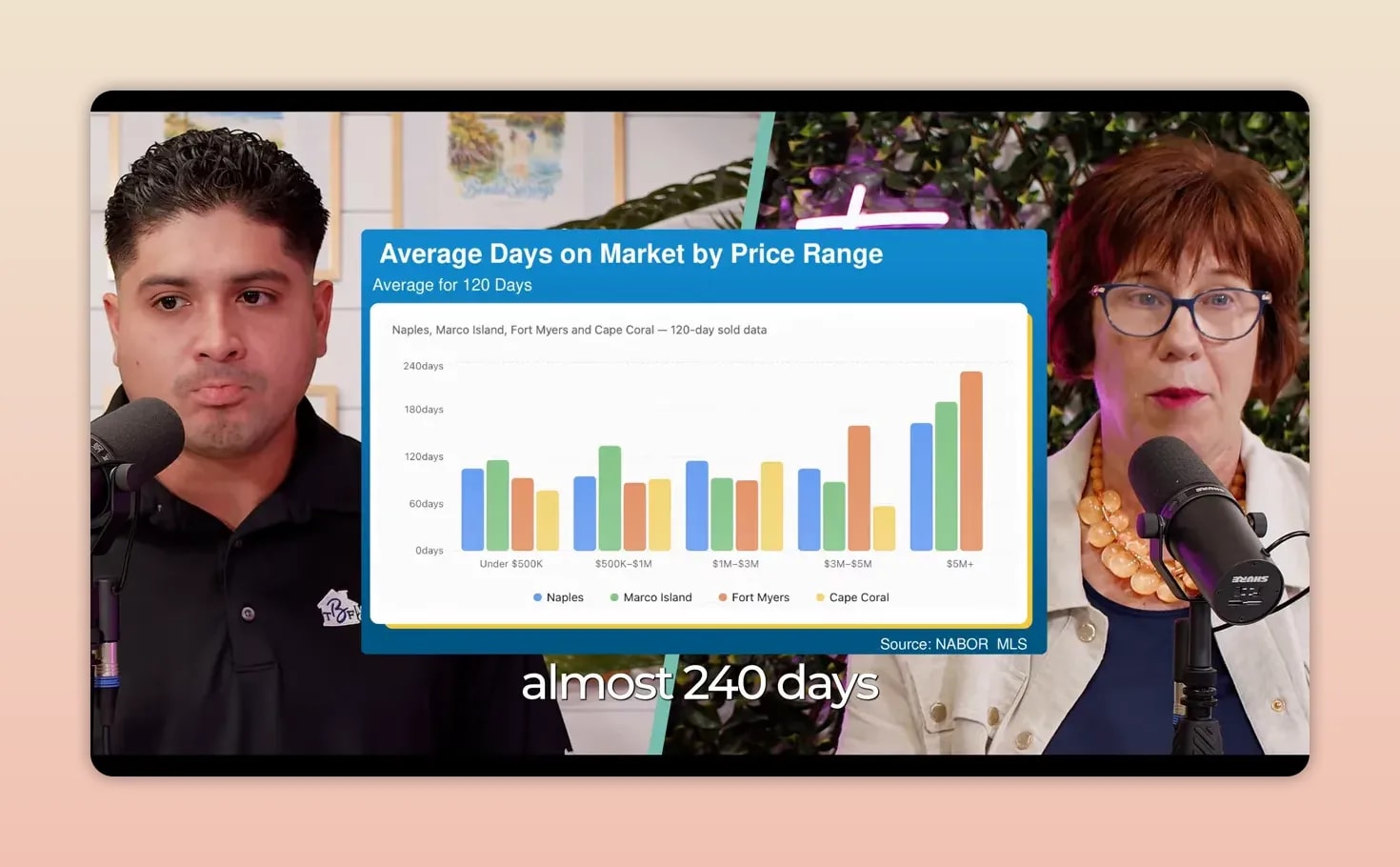
The recent local comparison shows many homes below $500,000 selling in fewer than 120 days on average. At the $5 million-plus level, some properties take considerably longer.
The Fort Myers figure in that range approaches 240 days. The comparable Naples and Marco Island figures are around 180 days or less.
Higher price points can require a longer selling window, making a realistic launch price especially important.
Seasonality belongs in the conversation as well. A 120-day lookback that includes summer captures a quieter period for some Marco Island properties. Snowbirds are called snowbirds for a reason.
Fewer seasonal buyers in town does not mean homes stop selling. But it can affect how a short stretch of market data reads.
Prices Look Steady, While Sales Are Improving
Median sale prices through August do not show a broad local price collapse. Marco Island’s median was down almost 5% in the comparison discussed, and roughly 10% below its 2024 level.
Cape Coral had dipped from 2024 to 2025 before moving back up in 2026. Taken together, the communities look more stable than dramatically rising or falling.
A median is the midpoint of homes sold, not a price change applied to every property. If one month includes more sales at a lower price point, the median can shift. That happens even when an individual home’s value has not changed by the same amount.
That distinction is particularly important in markets with a wide range of property types and prices.
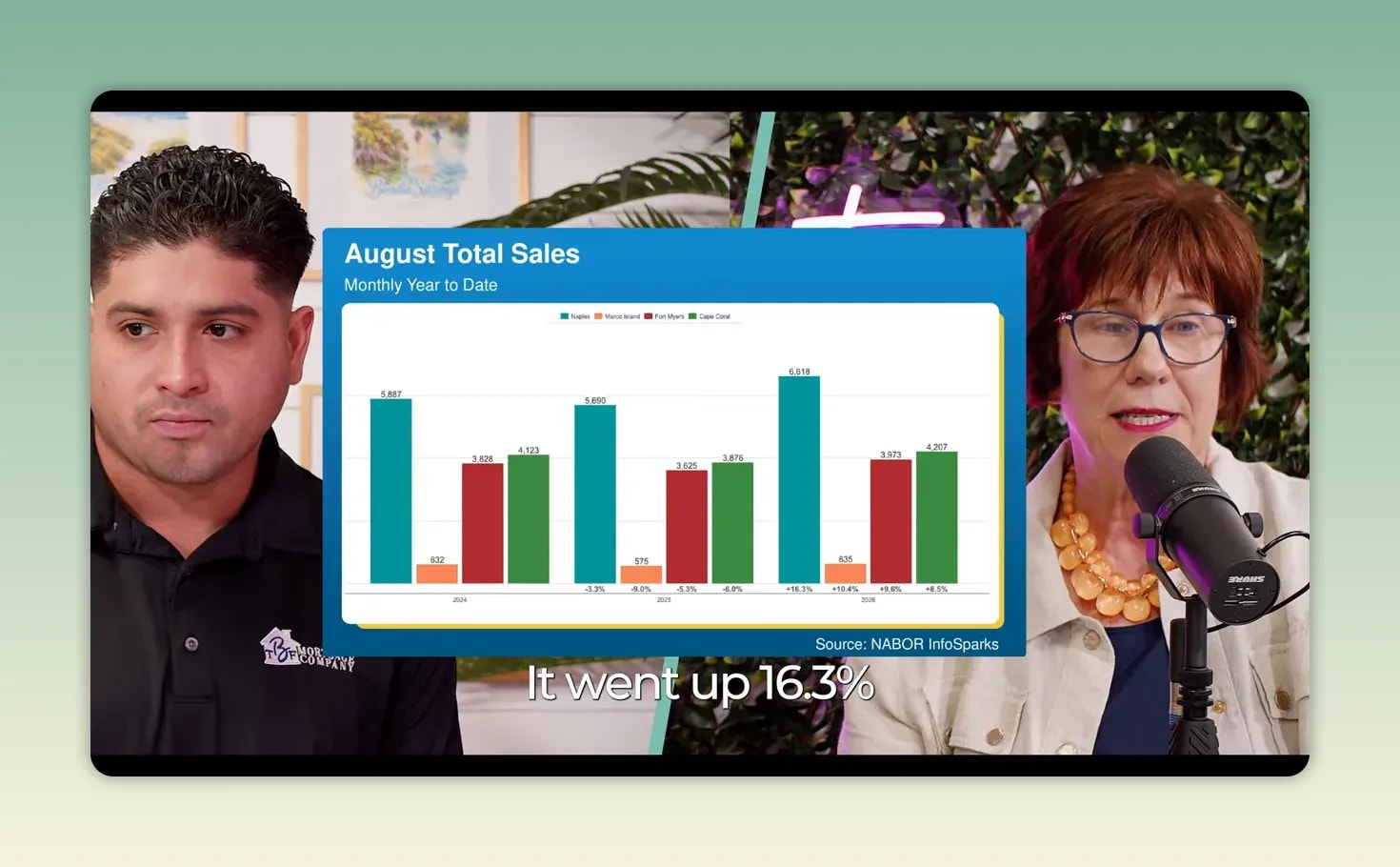
Sales volume offers an encouraging counterpoint. In August, Naples recorded 16.3% more sales than in August 2025. The communities in the local comparison also posted higher August sales counts than in 2024.
More transactions alongside relatively steady prices suggest a market that is functioning, even as buyers remain selective. Naples posted a notable year-over-year gain in August sales, even as local prices remained comparatively steady.
What Does This Mean for a Move?
The local market appears to be moving toward better balance. Multiple-offer situations are not the norm everywhere, but some are beginning to appear.
Buyers have opportunities to compare properties carefully. Sellers can still succeed when they understand their segment and price accordingly. Neither side should assume the market is entirely in its favor.
Waiting for a dramatic drop in mortgage rates or home prices is a gamble, not a plan. Recent local figures do not show prices suddenly jumping or falling. No one can promise where rates will go next.
Financing can be revisited if circumstances change, but today’s purchase still needs to work at today’s costs.
A job change, a growing family, or a second-home goal may offer a better timetable. A decision to sell an existing property could too, rather than a prediction about the market. Someone exploring Naples homes for sale will see a different mix of choices. Marco Island homes for sale present a completely different picture.
The useful next step is to examine the relevant community, price range, financing, and property together.
Southwest Florida remains a market of choices, not one-size-fits-all answers. Homeowners have equity to consider, buyers have distinct opportunities across the region, and sellers have real activity to work with.
Good decisions start by replacing the loudest headline with the numbers closest to home.
Are you considering buying, selling, investing, or relocating to Southwest Florida real estate? The team at the Bartos Group can help you navigate the market. Expect trusted local expertise and personalized guidance every step of the way.
Get The Local Numbers With Bartos Group
FAQ
Is Southwest Florida a buyer’s market or a seller’s market in September 2026?
Local conditions appear to be moving toward a more balanced market, although leverage varies by community, price point, and property.
Does a change in median sale price show what an individual home is worth?
No. The median reflects the mix of properties sold. An individual home needs to be evaluated against relevant nearby sales and current competition.
How can a homeowner access home equity without selling?
A HELOC or home equity loan may be an option, while a cash-out refinance is another route. Eligibility and terms depend on the homeowner’s circumstances.