
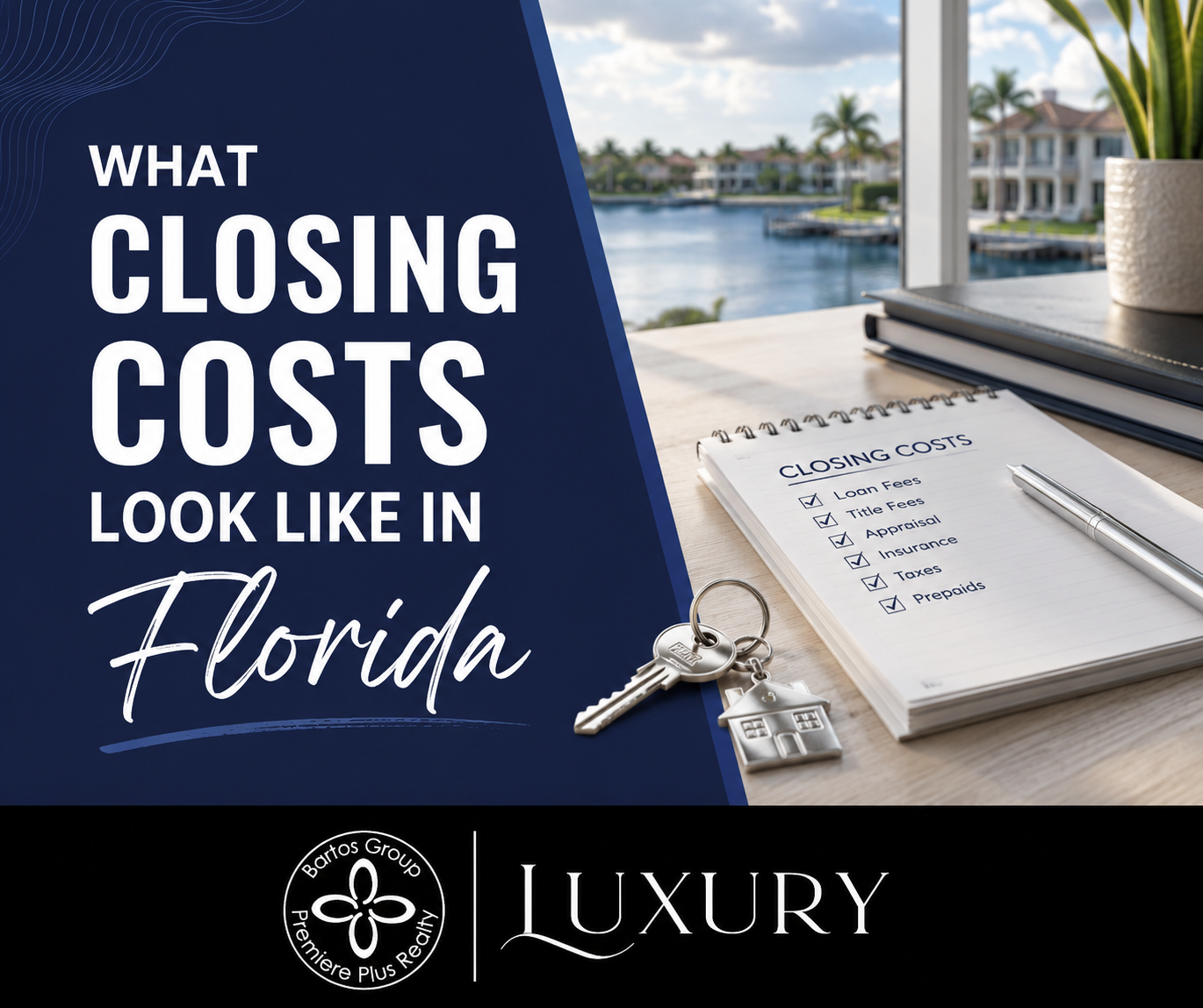
When buying a home in Florida, many buyers focus heavily on the down payment, interest rates, and monthly mortgage payments. Insurance costs get plenty of attention too.
But one expense that often catches buyers off guard is closing costs.
Are you purchasing a beachfront condo in Naples? Maybe a waterfront home on Marco Island?
A golf community property in Bonita Springs, or a family home in Fort Myers, works too. Understanding closing costs is an important part of preparing financially for homeownership in Florida.
For relocation buyers especially, Florida closing costs may differ from what they’re used to in other states.
Here’s what buyers should know about Florida closing costs in 2026.
Plan Your Closing Costs With Bartos Group
What Are Closing Costs?
Closing costs are the various fees and expenses associated with finalizing a real estate transaction.
These costs are paid at closing in addition to the down payment, earnest money deposits, and prepaid expenses.
Closing costs can include lender fees, title insurance, and recording fees. Taxes, escrow funding, prepaid insurance, and HOA-related fees are common too.
Both buyers and sellers typically have closing costs, although the specific expenses often differ.
How Much Are Closing Costs in Florida?
For buyers in Florida, closing costs typically range from approximately 2% to 5% of the purchase price. Financing type, property type, and loan structure all play a role. Insurance requirements, HOA or condo fees, and escrow setup matter too.
Luxury and waterfront properties may sometimes involve higher prepaid insurance and escrow expenses. Flood insurance, windstorm coverage, and larger tax bills are usually why.
Loan-Related Costs
If the buyer is financing the property, lender-related fees are often a major component of closing costs.
These may include loan origination fees, underwriting fees, and appraisal fees. Credit report fees and discount points, if applicable, add to the total.
The exact structure depends on the loan product and lender.
Cash buyers often have significantly lower closing costs because they avoid many financing-related expenses.
Title Insurance Is a Major Florida Closing Cost
Florida real estate transactions typically involve title insurance.
Title insurance helps protect buyers and lenders from potential ownership or title issues involving the property.
There are usually two possible policies: a lender’s title policy and an owner’s title policy.
One thing unique about Florida: responsibility for paying title insurance can vary by county and local custom.
In Southwest Florida markets like Naples and Marco Island, this varies. The party paying for title insurance often depends on negotiations and local norms.
Recording and Government Fees
Florida closings also include government-related filing expenses. These include recording fees, documentary stamp taxes, and intangible taxes on financed amounts.
These fees are associated with officially recording the transaction and mortgage documents.
Prepaid Property Taxes and Insurance
One of the biggest surprises for many buyers is prepaid escrow funding.
Lenders often require buyers to prepay portions of property taxes, homeowners insurance, flood insurance, and mortgage interest.
This money is typically placed into escrow accounts for future payments.
Because of Florida’s insurance environment, prepaid insurance expenses can become substantial. This is especially true for waterfront homes, luxury properties, and older coastal homes.
HOA and Condo Fees at Closing
If the property is located within an HOA or condo association, buyers may also encounter fees. HOA transfer fees and condo application fees are common. Capital contribution fees and estoppel fees can add up too.
Luxury condo buildings and golf communities may carry especially high transfer-related costs.
Buyers should always review HOA financial obligations carefully before closing.
Plan Your Closing Costs With Bartos Group
Property Taxes Can Be Adjusted at Closing
Property taxes are usually prorated between the buyer and seller at closing.
This means the seller pays taxes for the portion of the year they owned the property. The buyer assumes responsibility moving forward.
However, buyers should also understand that future property taxes may change after purchase. Purchase price, homestead status, and prior ownership history all play a role.
Many relocation buyers underestimate how much taxes can reset after a transaction.
Flood Insurance Can Affect Cash Needed to Close
For waterfront or flood-zone properties, flood insurance requirements may significantly affect closing costs.
Buyers may need to prepay annual flood insurance premiums, escrow reserves, and additional lender-required reserves.
This is especially common in Naples waterfront neighborhoods, Marco Island canal communities, Gulf-access homes, and coastal condos.
Condo Purchases Often Include Additional Documentation Fees
Florida condo purchases frequently involve additional administrative costs.
These may include condo questionnaires and association document fees. Application processing fees, interview requirements, and background checks are common too.
Every association operates differently, so buyers should understand these requirements early in the process.
Sellers Also Have Closing Costs
While this article focuses primarily on buyer costs, sellers also typically pay expenses. These include real estate commissions and documentary stamp taxes on the deed. Title-related expenses, HOA estoppel fees, and attorney or settlement-related costs round out the list.
Seller net proceeds are often influenced significantly by these expenses.
Luxury and Waterfront Properties Often Carry Higher Prepaids
Luxury buyers should understand something important. High-end waterfront homes may require substantially larger cash reserves at closing. Insurance costs, tax prorations, HOA dues, and escrow funding are usually why.
For example, a luxury waterfront estate in Naples may require significantly higher prepaid insurance than an inland home. Waterfront condos may involve larger association transfer fees and reserves.
Cash Buyers Typically Have Simpler Closings
One advantage cash buyers often enjoy is a simplified closing structure.
Without lender involvement, buyers may avoid appraisal requirements and loan origination fees. Mortgage recording expenses and escrow funding requirements often disappear too.
However, even cash buyers still typically pay title expenses, recording fees, inspections, and insurance setup costs.
Closing Costs Are Part of Smart Financial Planning
One of the biggest mistakes buyers make is budgeting only for the down payment while overlooking closing costs entirely.
Buyers should prepare early by requesting lender estimates and reviewing insurance quotes. Understanding HOA obligations, evaluating waterfront expenses, and discussing estimated cash-to-close figures help too.
Proper planning helps avoid surprises late in the transaction process.
Final Thoughts: Florida Closing Costs Require Preparation
Closing costs are a normal part of purchasing real estate in Florida. Even so, they can vary significantly depending on financing, property type, and waterfront exposure. Insurance requirements, HOA structures, and luxury market segment matter too.
Understanding these expenses upfront helps buyers make more informed and financially confident decisions.
Are you purchasing a waterfront estate in Naples or a beachfront condo on Marco Island? A golf community home in Bonita Springs, or a family residence in Fort Myers or Cape Coral, works too. Preparing for closing costs is an important part of buying smart in Southwest Florida.
Are you considering buying, selling, investing, or relocating to Southwest Florida real estate? The team at the Bartos Group can help you navigate the market. Expect trusted local expertise and personalized guidance every step of the way.
Plan Your Closing Costs With Bartos Group
FAQ
How much are closing costs in Florida?
Closing costs typically range from about 2% to 5% of the purchase price. Financing type, property type, and insurance requirements all play a role. Luxury and waterfront properties often land toward the higher end.
Who pays for title insurance in Florida?
It varies by county and local custom. In Naples and Marco Island, the paying party often depends on negotiations. Local norms play a role too.
Do cash buyers still pay closing costs in Florida?
Yes, but typically less. Cash buyers avoid appraisal fees and loan origination fees. Escrow funding requirements usually disappear too, though title expenses, recording fees, and inspections still apply.
Why do waterfront homes often have higher closing costs?
Flood insurance requirements and larger prepaid escrow reserves add up fast. Higher tax prorations do too, especially in Naples and Marco Island.
Will my property taxes change after buying a home in Florida?
Often, yes. Taxes may reset based on purchase price, homestead status, and prior ownership history. Buyers shouldn’t assume the seller’s tax bill will carry over unchanged.