
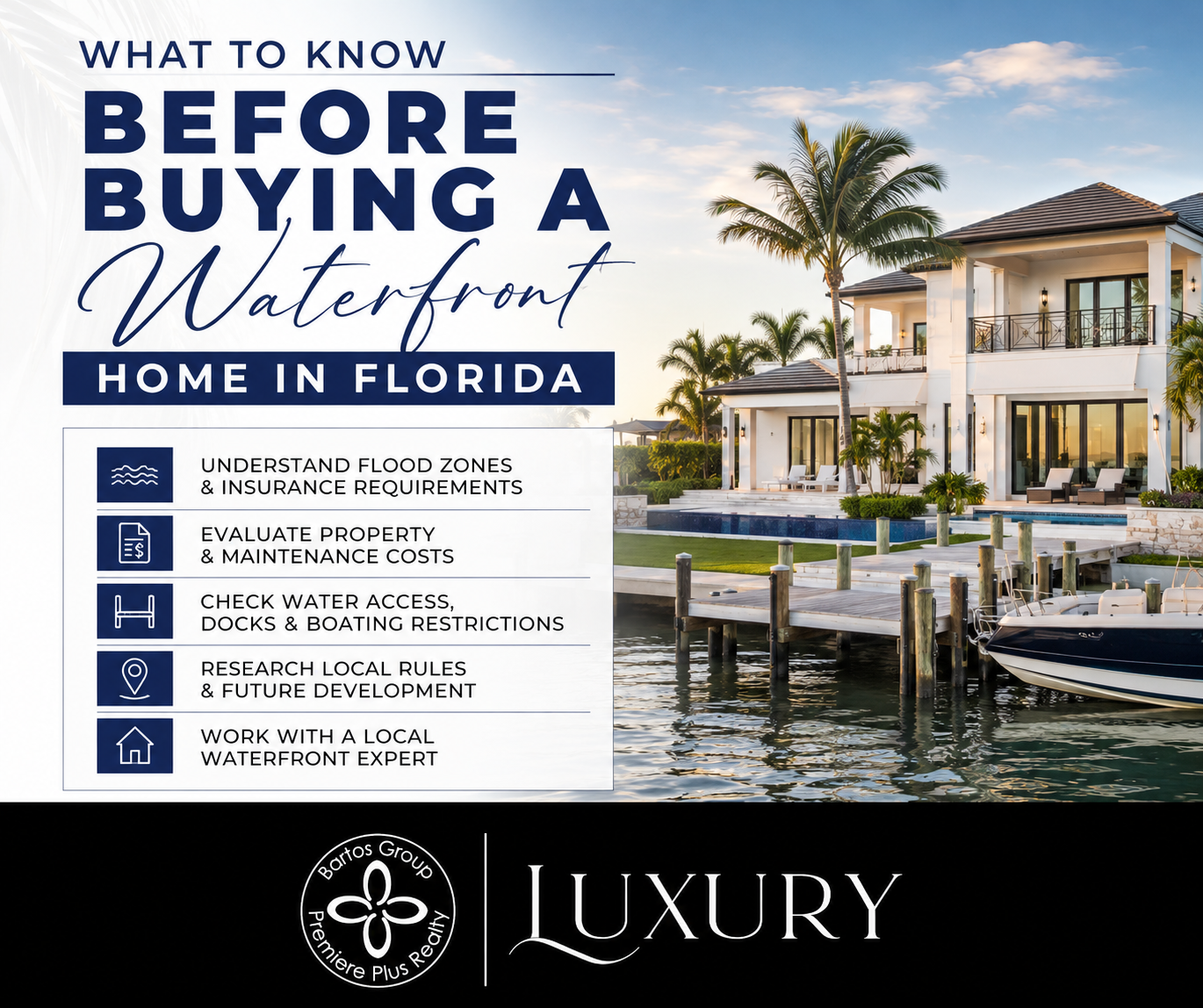
For many buyers, owning a waterfront home in Florida is the ultimate dream.
Imagine waking up to sunrise reflections on the water, spending weekends boating from your backyard, enjoying Gulf sunsets from your lanai, and living the coastal lifestyle year-round.
In Southwest Florida, waterfront living is one of the biggest reasons buyers relocate to areas like Naples, Marco Island, Cape Coral, Fort Myers, and Bonita Springs.
But purchasing waterfront property is very different from buying a standard residential home. Waterfront homes come with unique considerations involving boating access, flood zones, insurance, maintenance, and long-term ownership costs that many relocation buyers may not initially realize.
Before buying a waterfront home in Florida, here’s what you need to know.
Not All Waterfront Property Is the Same
One of the first things buyers learn is that “waterfront” can mean many different things.
Florida waterfront homes may include:
- Gulf-access canals
- Bayfront homes
- Riverfront properties
- Lakefront homes
- Inland freshwater canals
- Oceanfront or beachfront property
The type of waterfront directly impacts home value, boating access, insurance, maintenance, resale potential, and lifestyle.
For example, a Gulf-access home on Marco Island offers a very different ownership experience than a freshwater canal home in Cape Coral. Understanding exactly what kind of waterfront property you’re buying is critical.
Gulf Access Is a Major Value Driver
In Southwest Florida, Gulf-access homes are among the most desirable properties on the market. A Gulf-access property allows homeowners to navigate by boat from their dock to the Gulf of Mexico.
However, not all Gulf access is equal. Buyers should carefully evaluate:
- How long it takes to reach open water
- Bridge clearances
- Water depth
- Tidal considerations
- Canal width
- Dock and lift capability
For boating enthusiasts, these details matter tremendously. Large yachts may require bridge-free Gulf access, while casual recreational boaters may prioritize convenience over speed. Properties with quick, direct Gulf access often command significantly higher pricing.
Flood Zones Matter More Than Many Buyers Realize
Flood zones are one of the most important considerations when purchasing waterfront property in Florida.
Flood zone designation can impact flood insurance requirements, insurance costs, financing requirements, and future resale value.
Even homes located within the same neighborhood can have very different flood zone classifications depending on elevation, water proximity, and construction details.
Buyers should never assume all waterfront properties carry the same flood risk or insurance costs. Working with experienced local professionals is essential during the buying process.
Insurance Costs Can Vary Significantly
Insurance is one of the biggest financial considerations when buying waterfront real estate in Florida.
Costs may vary depending on:
- Flood zone and elevation
- Home age and roof age
- Waterfront exposure
- Construction type
- Hurricane protection features
Buyers should review homeowners insurance, flood insurance, windstorm coverage, deductibles, and inspection requirements.
One of the biggest mistakes waterfront buyers make is focusing only on purchase price without fully understanding long-term insurance expenses.
Seawalls, Docks, and Boat Lifts Require Maintenance
Owning waterfront property often means maintaining additional structures beyond the home itself.
Common waterfront maintenance items include:
- Seawalls
- Docks
- Boat lifts
- Pilings
- Marine electrical systems
These structures can be expensive to repair or replace if neglected. Before purchasing, buyers should evaluate the age and condition of seawalls, dock permits, boat lift functionality, recent inspections, and potential future repair costs.
A thorough inspection is especially important for older waterfront properties.
Saltwater Environments Create Additional Wear and Tear
Florida waterfront homes experience more exposure to salt air, humidity, corrosion, wind, and moisture.
This affects exterior paint, metal fixtures, pool systems, HVAC equipment, outdoor furniture, and boat equipment.
Waterfront homes often require more frequent maintenance compared to inland properties. For many buyers, the lifestyle is absolutely worth it — but understanding these ownership realities upfront is important.
Waterfront Lifestyle Matters as Much as the Home
Many relocation buyers focus heavily on the house itself and forget to evaluate how they’ll actually use the waterfront lifestyle.
Before buying, consider:
- Do you plan to own a boat?
- How important is quick Gulf access?
- Do you want sunset views?
- Are you prioritizing kayaking or fishing?
- Do you prefer quiet canals or open water views?
- Will you entertain outdoors often?
Different waterfront properties support very different lifestyles. Marco Island heavily emphasizes boating and Gulf access. Naples offers luxury bayfront and beachfront living. Cape Coral provides extensive canal systems and boating opportunities. Fort Myers offers riverfront and marina-focused communities.
Understanding your lifestyle goals helps narrow the right waterfront fit.
New Construction vs Older Waterfront Homes
Many buyers today are weighing newer waterfront homes against older luxury properties.
New construction advantages include updated building codes, modern hurricane standards, higher elevation potential, smart home technology, and lower initial maintenance.
Older waterfront home advantages often include larger lots, mature landscaping, prime locations, established neighborhoods, and character and architectural uniqueness.
Both options can offer tremendous value depending on buyer priorities.
Waterfront Homes Often Hold Strong Long-Term Appeal
One reason buyers continue investing heavily in Florida waterfront real estate is simple: limited supply.
There will always be a finite amount of waterfront property. As Southwest Florida continues growing, many buyers view waterfront homes as lifestyle assets, long-term investments, legacy properties, and seasonal income opportunities.
Luxury waterfront homes in Naples and Marco Island especially continue attracting strong demand from both domestic and international buyers.
Waterfront Living Is a Lifestyle Investment
At the end of the day, buying a waterfront home in Florida is about much more than real estate.
For many buyers, it represents:
- A lifestyle upgrade
- Outdoor living year-round
- Boating and fishing access
- Sunset views every evening
- Entertaining near the water
- A more relaxed coastal atmosphere
The emotional lifestyle component is a huge reason waterfront properties continue commanding premium pricing.
Final Thoughts: Waterfront Real Estate Requires Specialized Knowledge
Buying a waterfront home in Florida can be incredibly rewarding — but it also requires more due diligence than many traditional residential purchases.
Understanding Gulf access, flood zones, insurance, seawalls and docks, maintenance expectations, and waterfront lifestyle differences is essential before making a purchase.
Whether you’re searching for a luxury boating estate on Marco Island, a canal-front property in Cape Coral, or a waterfront retreat in Naples, working with knowledgeable local experts can help you make a smarter and more confident investment.
If you’re considering buying, selling, investing, or relocating to Southwest Florida waterfront real estate, the team at The Bartos Group is here to help you navigate the market with trusted local expertise and personalized guidance.
FAQ
What should I know before buying a waterfront home in Florida?
Key things to understand include the type of waterfront access, Gulf access details and boating capability, flood zone designation and insurance costs, seawall and dock condition, saltwater maintenance requirements, and how the property’s lifestyle matches your goals. Waterfront purchases require more due diligence than standard residential homes and benefit greatly from experienced local representation.
Is all Gulf access waterfront the same in Southwest Florida?
No. Gulf access varies significantly between properties. Some homes offer quick, bridge-free routes to open water with deep canals capable of larger vessels. Others may involve multiple bridges, height restrictions, shallow water, or longer travel times. Understanding the specific boating access of any property — including water depth, bridge clearances, and tidal conditions — is critical before purchasing.
How much does flood insurance cost for a waterfront home in Florida?
Flood insurance costs vary significantly depending on flood zone designation, elevation, home age, construction type, and waterfront exposure. Some properties may have minimal flood insurance requirements while others — particularly older homes in high-risk coastal zones — may carry substantial premiums. Buyers should always obtain flood insurance quotes early in the purchasing process rather than waiting until closing.
What is a seawall and why does it matter when buying waterfront property?
A seawall is a barrier structure along the water’s edge that protects a waterfront property from erosion, wave action, and storm damage. Seawall condition is one of the most important things to inspect when purchasing waterfront real estate. Seawall repairs and replacements can be extremely expensive, so buyers should carefully evaluate age, structural condition, permits, and recent inspection history before committing to a waterfront purchase.
Which Southwest Florida city is best for buying waterfront property?
It depends on lifestyle and budget. Marco Island and Naples offer luxury waterfront living with Gulf access at premium price points. Cape Coral provides one of the largest canal systems in the country with more accessible waterfront pricing. Fort Myers offers riverfront and marina-focused communities. Bonita Springs provides coastal proximity with a range of price options. Each market delivers a different version of the waterfront lifestyle.