
This July 2026 real estate market update is about separating dramatic headlines from the details that actually matter. Yes, more sellers are pulling homes off the market. Yes, homes are taking longer to sell in many areas. But that does not mean the housing market has stopped. It means buyers and sellers are adjusting to a more balanced, more selective environment.
For Southwest Florida, that distinction is especially important. This is a lifestyle and second-home market, where sellers are often not under the same pressure as someone relocating for a job. They may choose to wait rather than accept an offer they believe does not reflect their home’s value.
Get The Real July 2026 Numbers From The Bartos Group
Headlines Are Designed to Terrify, Not Clarify
One recent headline claimed that sellers are pulling homes from the market at the fastest pace since 2020. There is truth behind it, but context matters.
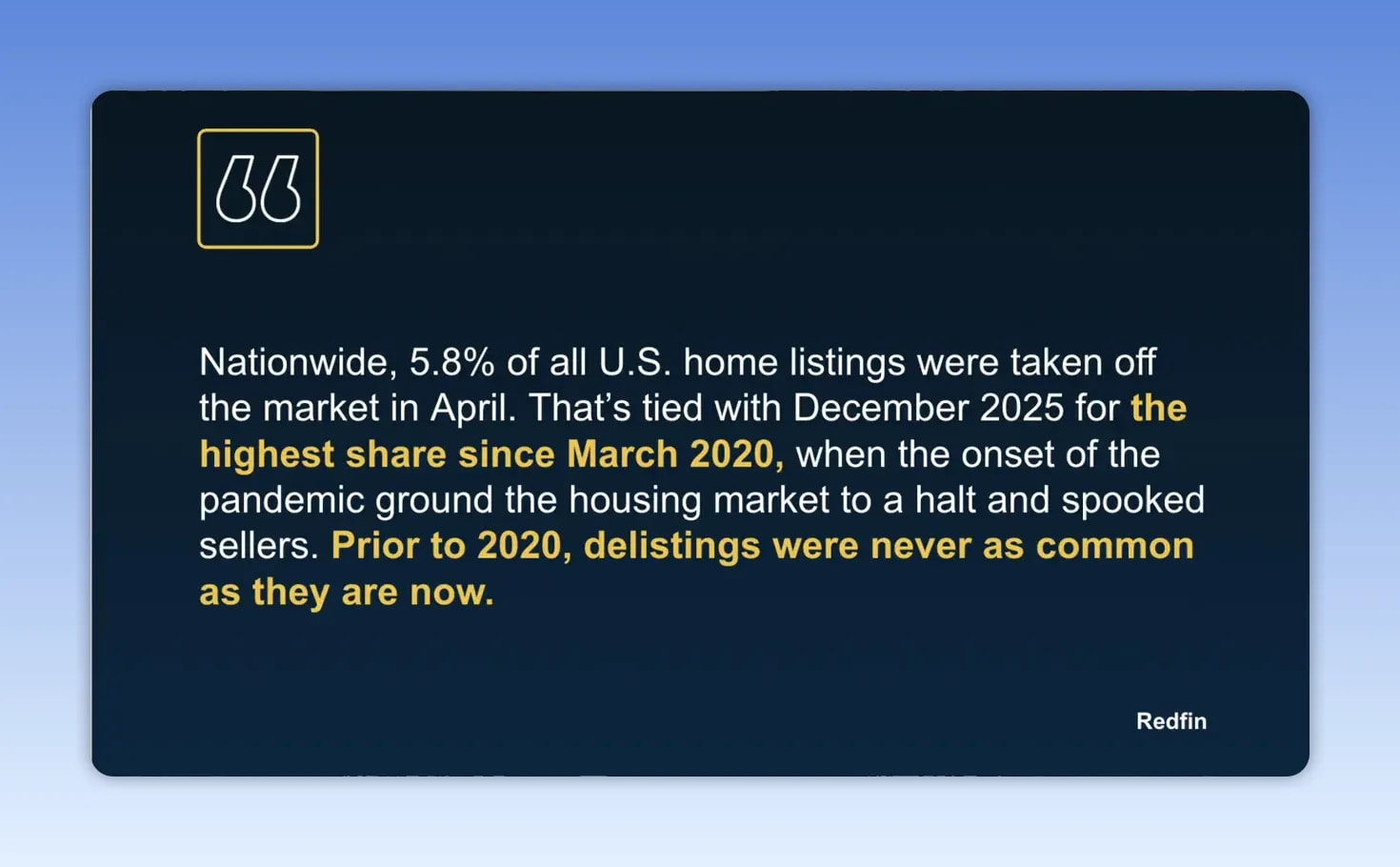
Redfin reported that 5.8% of U.S. home listings were taken off the market in April, tying December 2025 for the highest share since March 2020. Before 2020, delistings were far less common than they are today.
In some markets, that trend is more dramatic than others. Atlanta, for example, had more than 10% of listings delisted. Other markets are seeing far less. The important takeaway is not that every seller is running away from the market. Many are simply deciding that, if the timing or price is not right, they can wait.
That is a familiar dynamic in Southwest Florida. Many owners have flexibility, particularly with vacation homes and second homes. They do not necessarily have to sell today, so they may take a break from the market instead of making an immediate price adjustment.
The Three Forces Reshaping Today’s Market
This real estate market update comes down to three big forces that are reshaping conditions across the country:
- Recent inventory growth in many markets
- Shifting prices as sellers compete for available buyers
- Longer days on market before a home goes under contract
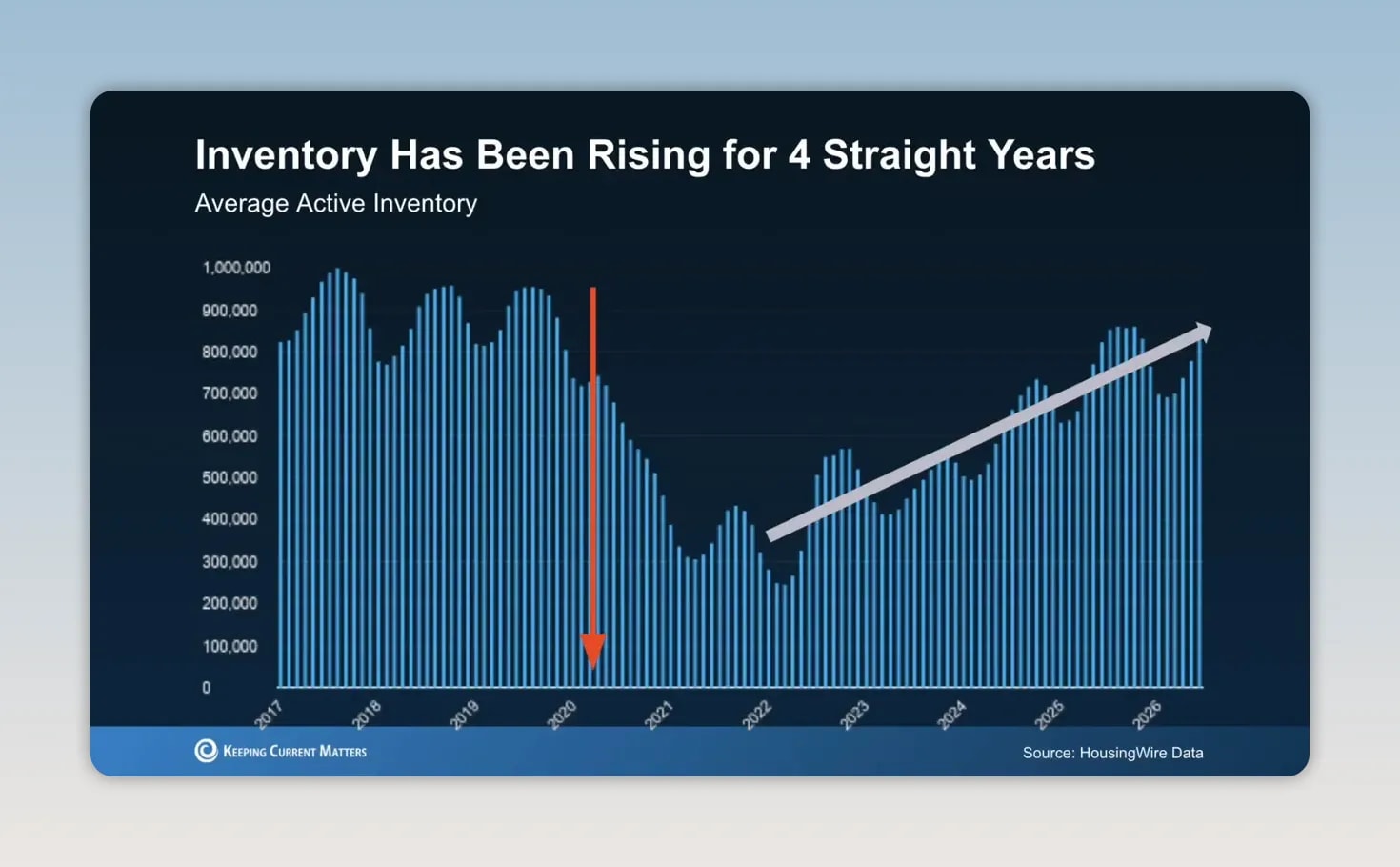
Nationally, active inventory has been rising steadily since 2022, following the exceptionally tight supply conditions of 2020 and 2021. More choices for buyers naturally create more competition for sellers. When homes have more competition, pricing and presentation matter even more.
Southwest Florida has its own cycle. The local market often moves ahead of broader national trends, whether it is rising or cooling. Inventory in this area is reducing, which is a meaningful local difference from the general national story.
That is why broad national headlines can be useful, but they should never replace a local analysis. A seller in Marco Island, Naples, or another Southwest Florida community needs to understand what comparable homes are doing right now, not simply what a national average is doing.
Get The Real July 2026 Numbers From The Bartos Group
Sellers Still Expect Strong Prices, but the Market Is Negotiating
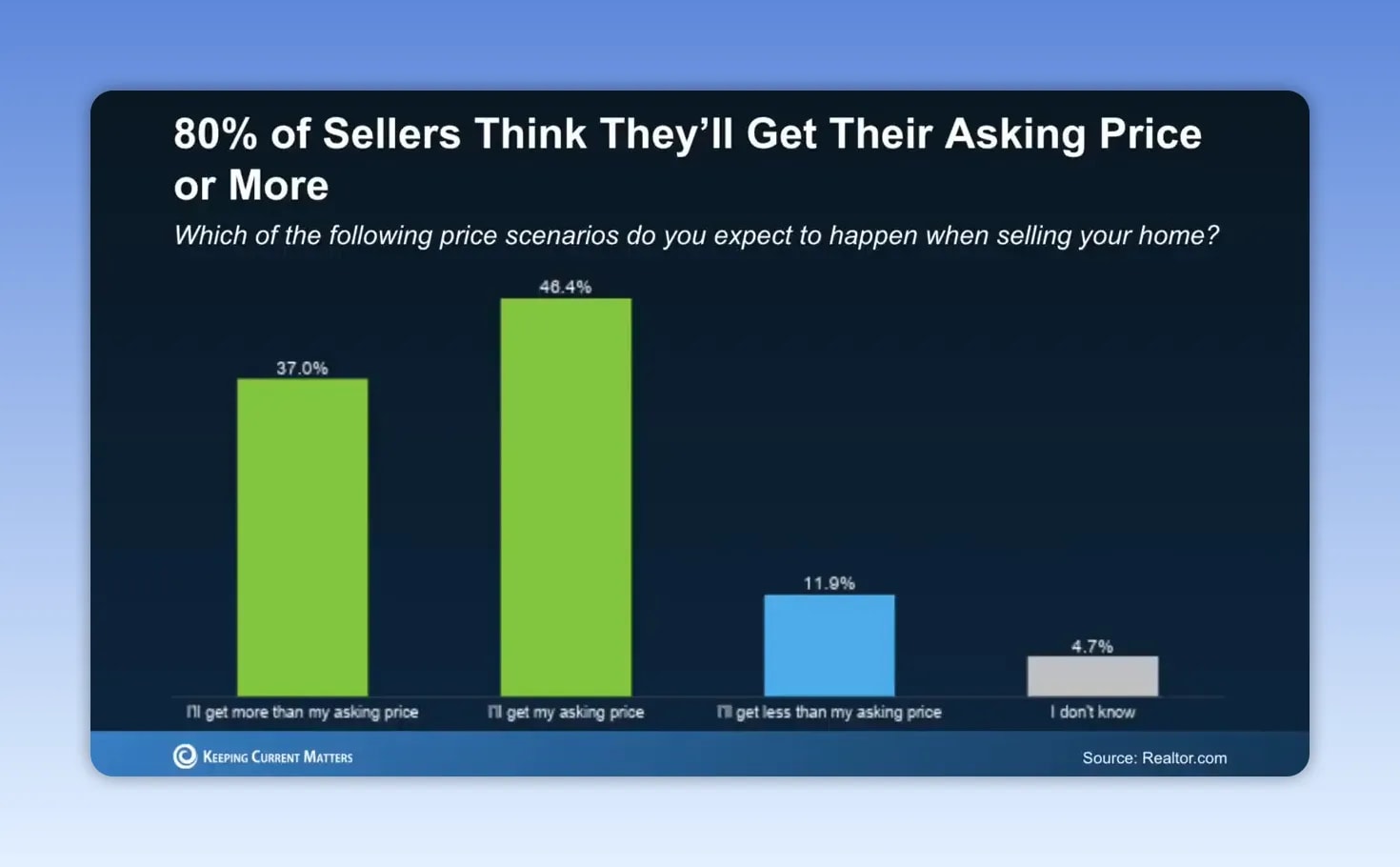
There is a wide gap between what many sellers expect and what market conditions may support. Realtor.com found that about 80% of sellers believe they will receive their asking price or more. More specifically, 37% expected to receive above asking price, while 46.4% expected to receive right at asking price.
High expectations are understandable, particularly after the extraordinary market of 2021 and 2022. But the negotiating environment has changed. In Southwest Florida, sale-to-list price is roughly 93% to 94%, meaning many successful transactions are closing below the original list price.
Across the country, the share of homes selling below asking price has grown considerably. About 38% of homes sold for less than list price in 2021. By 2025, that figure had risen to 62%.
That does not automatically mean a home is losing value. It means list price and sale price are no longer always the same thing. A well-positioned listing can still sell, but sellers need to enter the market with a strategy, not simply a hope that buyers will pay any number placed on the property.
Research from the University of Utah describes the situation well: when sellers do not receive the price they expect, many choose to stay put because moving no longer feels worth the cost. In a second-home market, that tendency can be even stronger.
Homes Are Taking Longer to Sell
Another clear theme in this real estate market update is time. Nationally, homes are not moving at the breakneck speed seen a few years ago.
Median days on market fell as low as 30 days in 2022, after averaging 35 days in 2021. Now the national figure has climbed to about 52 days. Across much of Florida, market times are closer to 75 days.
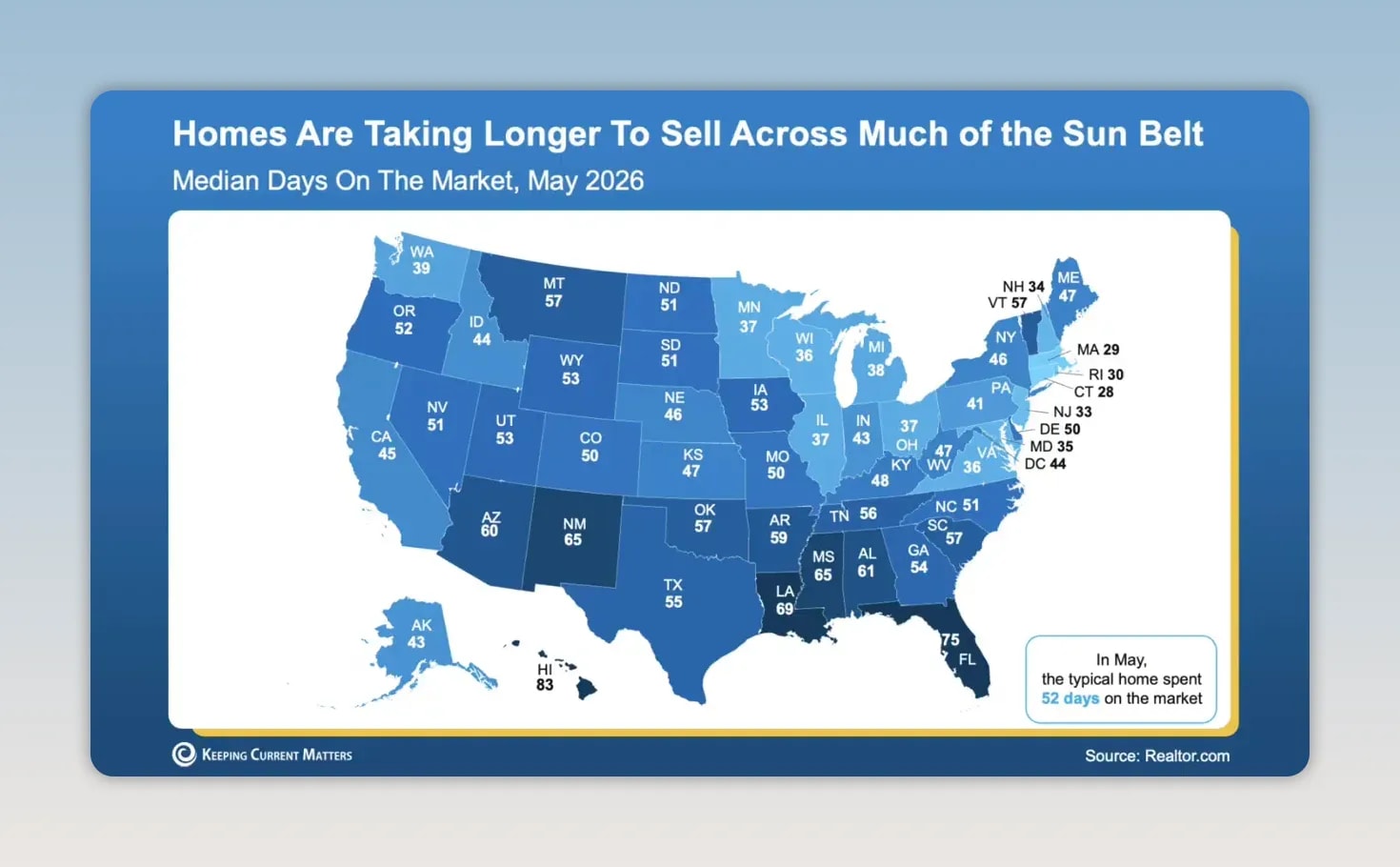
Florida is part of a broader Sun Belt pattern where homes generally require more time and stronger positioning to sell.
Longer market time is not a reason to panic. It is simply a reason to plan. Sellers should prepare for a more deliberate process, with strong marketing, appropriate pricing, clean presentation, and the patience to let the right buyer emerge.
Buyers should also understand that a longer market time does not necessarily signal a distressed seller. Some owners are firm, some are flexible, and some are simply waiting. The best negotiating strategy comes from understanding the motivation behind a specific property.
What the Second Half of 2026 May Bring
The outlook for the rest of the year is measured but encouraging. Forecasts shown in this real estate market update call for continued home-price growth in 2026, though at a far more normal pace than the dramatic appreciation of previous years.
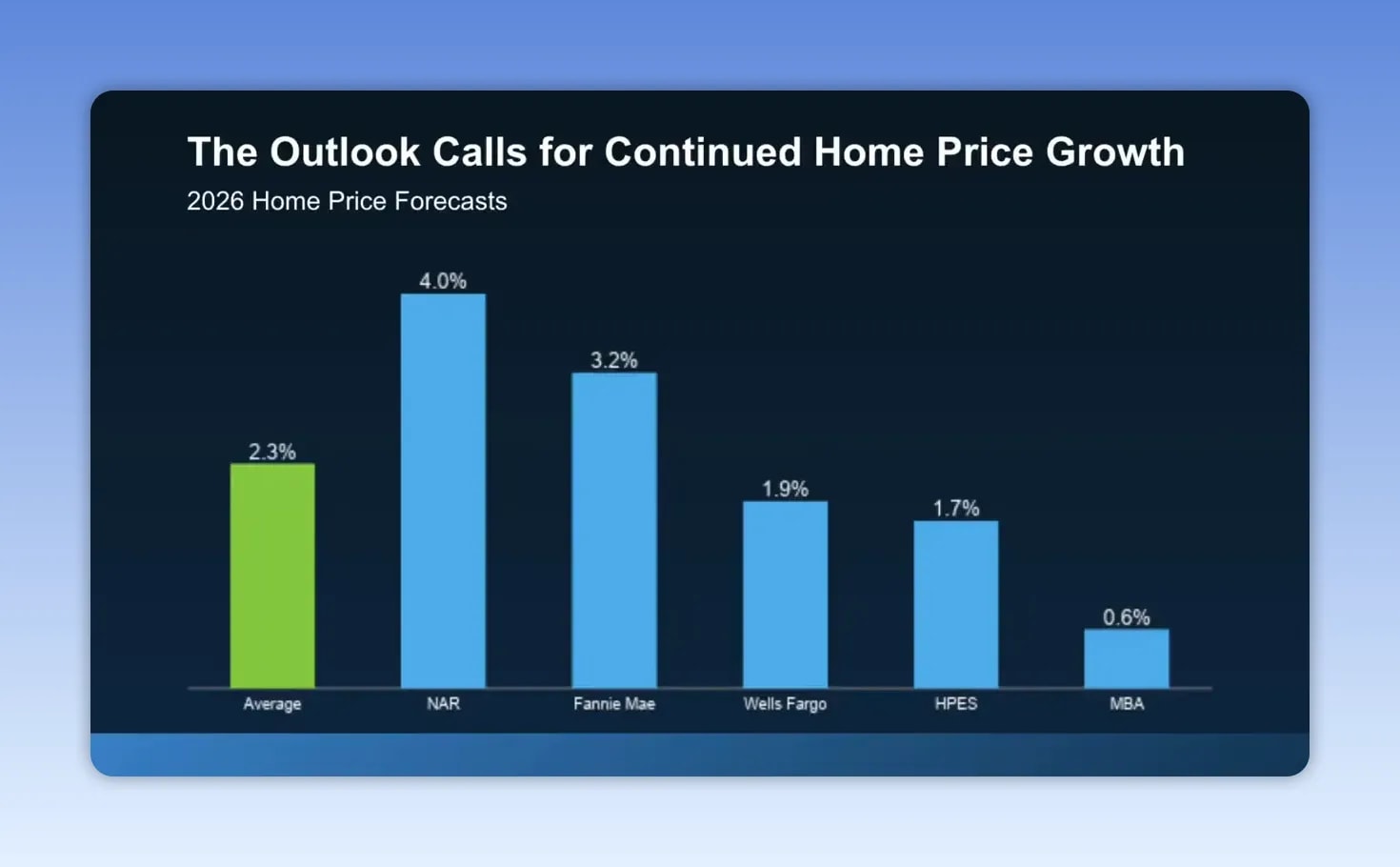
The National Association of Realtors forecast calls for about 2.3% price growth, while other forecasts range from modest growth to approximately 4%. Lawrence Yun of the National Association of Realtors also expects housing wealth accumulation to continue in 2026, estimating that a typical homeowner could gain roughly $16,000 in wealth this year on a national basis.
Southwest Florida has higher average home prices than many parts of the country, so the dollar impact of even modest appreciation can look different here. Still, every property and neighborhood has its own story. A waterfront property, a condominium, a golf community home, and an inland single-family residence should not be evaluated the same way.
Sales activity is also expected to improve modestly. Existing-home sales were roughly 4.75 million in 2024 and 2025, with a 2026 forecast near 4.878 million. It is not a huge jump, but it is movement in the right direction.
More Buyers Are Beginning to Say Yes
There is another encouraging signal in the housing data: buyer activity is improving. Pent-up demand has not disappeared. It is gradually coming back into the market.
That recovery will not look identical everywhere. Rates, employment conditions, local inventory, affordability, and consumer confidence all shape how quickly a market moves. Southwest Florida will not behave exactly like Detroit, Atlanta, or any other metro area, and that is precisely why local expertise matters.
For buyers, more inventory can mean more choices and more opportunity to negotiate thoughtfully. For sellers, it means the home needs to stand out from the competition. The market rewards preparation, accurate pricing, and a clear plan.
The Bottom Line for Southwest Florida
The July 2026 real estate market update is not a story of collapse. It is a story of transition. Inventory has changed, buyers have become more selective, and sellers are adjusting their expectations. At the same time, prices are still projected to grow, sales are expected to improve, and buyer demand is gradually returning.
For a seller, the message is simple: do not price based on what happened several years ago. Price based on the competition and the current buyer pool. For a buyer, the message is equally clear: opportunities exist, but every property requires a thoughtful evaluation of condition, location, price, and seller motivation.
Those considering a move can browse current Marco Island homes for sale or explore available Naples homes for sale. In a market that is shifting, local numbers and a smart strategy make all the difference.
If you’re considering buying, selling, investing, or relocating to Southwest Florida real estate, the team at The Bartos Group is here to help you navigate the market with trusted local expertise and personalized guidance.
Get The Real July 2026 Numbers From The Bartos Group
FAQ
Are more sellers really pulling their homes off the market in 2026?
Yes, delistings have increased, with Redfin reporting 5.8% of U.S. listings pulled in April, tying the highest share since March 2020. However, this often reflects sellers choosing to wait rather than accept a lower price, not a market collapse.
Are home prices expected to keep rising in 2026?
Most forecasts call for continued growth, with the National Association of Realtors projecting around 2.3% and other estimates ranging up to approximately 4%. This is a much more normal pace compared to the dramatic appreciation seen in prior years.
Why are homes taking longer to sell right now?
Rising inventory and more selective buyers have extended market times nationally to about 52 days, with Florida closer to 75 days. This reflects a more balanced market rather than a warning sign, and simply requires stronger pricing and presentation strategy.
Should sellers expect to get their full asking price?
Not necessarily. While about 80% of sellers expect asking price or more, the share of homes selling below list price has grown from 38% in 2021 to 62% in 2025. In Southwest Florida, sale-to-list price is running around 93% to 94%.
How does Southwest Florida’s market differ from the national trend?
Southwest Florida often moves ahead of national trends. While inventory is rising in many parts of the country, inventory in this region is actually reducing, making local analysis more important than relying on national averages alone.