
The Southwest Florida real estate market is getting a lot of noise right now. One week it is recessions and inflation. The next week it is government shutdowns, oil prices, or “rates are going up again.” It is easy to feel like everything is unstable. In this month’s Southwest Florida market update, Mary Bartos with the Bartos Group with Premiere Plus Realty + Randy Williams with Involve Lending break down what’s really happening in the real estate market here in paradise.
Here is the calmer truth: when the real numbers are lined up side by side, the market looks more steady than the headlines suggest. And that matters, because real estate is not just a story. It is a system made of job growth, unemployment, inflation, mortgage rates, housing supply, and buyer behavior.

The headline problem: uncertainty is loud, data is quieter
In conversations across the country, the same pattern keeps showing up: dramatic headlines meant to terrify, followed by slower data that is not as scary as the fear.
One of the clearest framing points from major financial outlooks is that large oil price spikes do not automatically trigger a U.S. recession, and they do not necessarily change the trajectory of core inflation. That is important because core inflation is one of the key inputs that influences how mortgage rates move.
When growth expectations hold steady and inflation stabilizes, the economy does not “flip” overnight. It adjusts. And for homebuyers and sellers, that gradual adjustment is exactly what you want to understand.
Economic stability signals: jobs, GDP, and the “R-word” (Recession)
One reason the mood feels shaky is that people are thinking in extremes. They want a yes-or-no answer to “Is a recession coming?” But real indicators tend to be less dramatic and more continuous.
A few stability signals discussed by lenders and financial analysts:
- Economic growth is expected to rebound, rather than collapse.
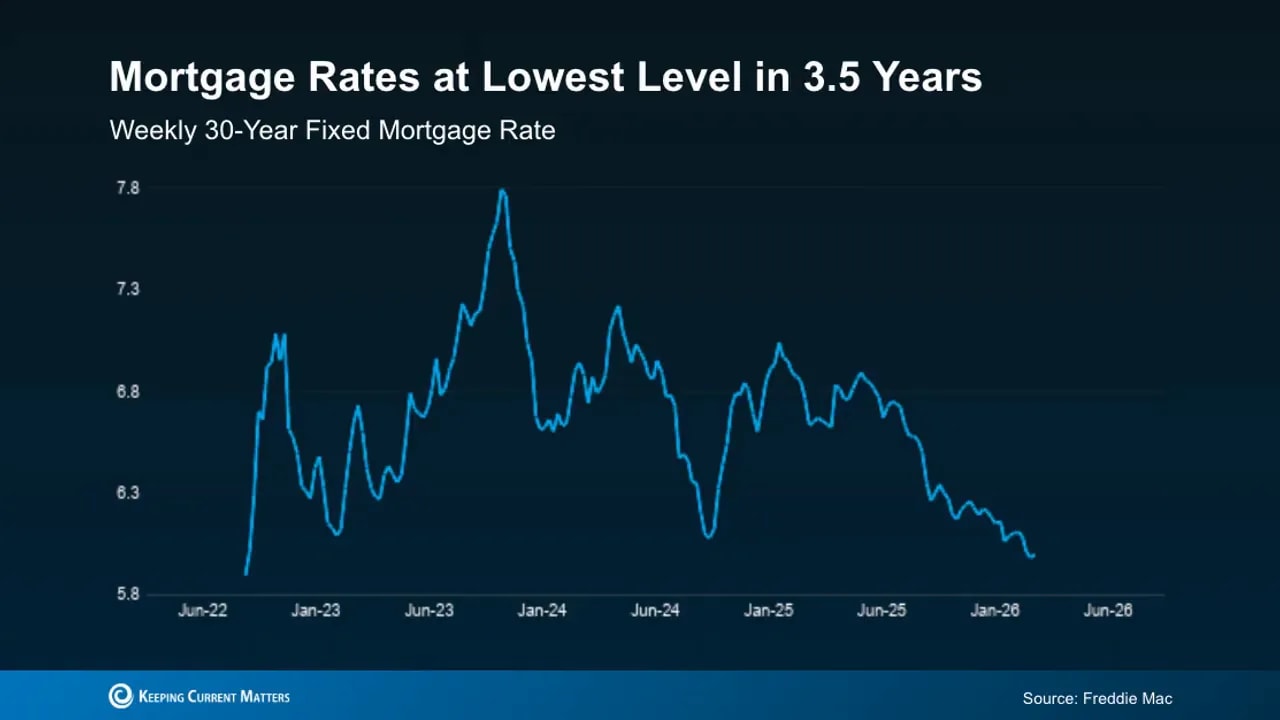
- Mortgage rates have generally been coming down as inflation stabilizes.
- Unemployment has been remarkably steady, close to full employment.
- GDP declines need to appear in two consecutive quarters to count as a recession in the strict sense. When you track the timeline, it is not lining up that way.
There is also an important mindset shift. Some people jump straight to “the R word.” But that is a big assumption when the data does not clearly point there. Markets are forward-looking, and real estate buyers and sellers benefit from staying grounded in what is happening now, not what fear is predicting.
Mortgage rates: they bounce, but the trend matters
Mortgage rates are rarely a straight line. They bounce based on events and investor expectations. In the current cycle, the conversation includes an “outlier” event tied to geopolitical risk, which can push rates higher in the short term.
The bigger takeaway is that over the past year, mortgage rates have still moved down overall. This supports the idea that affordability is improving compared to the earlier high-rate period.
For homeowners, that creates real options even if the goal is not to “move” to a new home:
- Refinancing may unlock payment relief for borrowers who were stuck waiting for the market to become more favorable.
- Locking in a better rate can change affordability without changing your address.
Affordability is about more than rates
Rates are only one piece of affordability. The other piece is stability. When unemployment is steady and near full employment, households can plan. That reduces panic behavior in real estate.
And here is where a key trend shows up: contract cancellations are rising nationwide, and they are at high levels compared to recent years. That sounds alarming, but it can actually be a sign of a more balanced buyer environment.
Why contract cancellations are up, and what it means
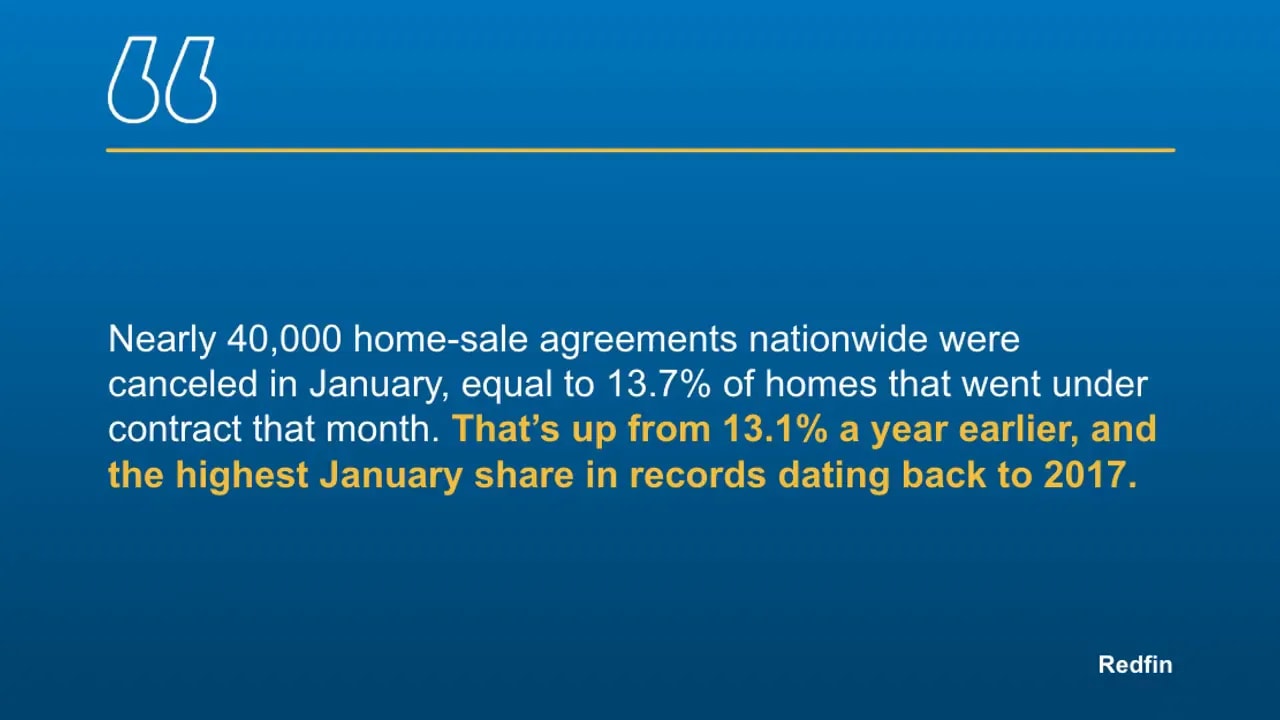
Redfin-reported data shows nearly 40,000 home sale agreements canceled nationwide in January, which equals 13.7% of homes that went under contract that month. That is up from 13.1% the year before and is the highest January share on record dating back to 2017.
In Southwest Florida, cancellation patterns can differ by month and by segment. But nationally, the behavior is not random. It is tied to what buyers are experiencing:
- Affordability pressure (especially mortgage payments) can push buyers to back out.
- Inspection contingency decisions can reveal issues buyers did not anticipate.
- Buyers who move quickly may “cold feet” later once the numbers fully sink in.
One agent perspective shared is that buyer urgency has softened. Buyers have more leverage now than they did in a tight sellers market. That does not mean buying is doomed. It means agreements are being tested more carefully, because buyers can afford to be selective.
In condo markets, the risk of cancellation can be influenced by timing and contract terms. One example mentioned is that condos can have a relatively short “recession” window that gives buyers a clear exit if they need it.
Inspections and the “top issues” buyers use to exit
When buyers cancel, inspections are often the tool they use. Redfin’s overview highlights that buyers frequently back out using inspection contingency, including when structural issues surface, but also when affordability becomes a deal-breaker after the financial reality is clear.
From an inspection standpoint, insurance and property-specific risks can be huge. The conversation includes a few practical examples:
- Flood and wind insurance considerations can sway decisions because they affect total monthly costs and insurability.
- Mold concerns and visible environmental risks can create uncertainty, even if the issue is manageable.
- Cosmetic crack issues can be misinterpreted by people moving from other regions who are not familiar with local building realities.
- Stucco and exterior conditions may look alarming but can have different levels of seriousness depending on what is actually happening behind the scenes.
Seller takeaway: reduce surprises without guaranteeing perfection
One strong recommendation is to think proactively. Some sellers consider a pre-listing inspection because it can help them understand what may come up later, giving them time to address issues or adjust expectations.
It is also fair to be honest about the tradeoff: a pre-listing inspection can lead to more disclosure requirements if it reveals problems sellers would rather handle quietly. Still, for many sellers, removing uncertainty can lead to fewer deal stumbles and calmer buyer negotiations.
Seller and buyer leverage: who has the options right now?
As housing costs and inventory change, buyer selectivity increases. Redfin’s commentary includes a big-picture theme: sellers outnumber buyers by a record margin. When buyers feel they have options, they can walk away if the deal does not meet their affordability or risk tolerance.
For sellers, that often translates into two realities:
- Pricing has to match demand. If sellers hold firm on a price that is out of step, the market can respond with fewer offers.
- Negotiation needs to be strategic, not emotional. Offers can come in lower than list, and smart sellers consider the “why” behind them.
In the same negotiation spirit, guidance mentioned from industry sources includes:
- Monitor demand: if demand slips, price reductions of roughly 2% to 5% can become necessary to regain momentum.
- Be ready to negotiate: sometimes offers that look “insulting” at first can be part of a viable strategy when structured correctly.
The key is keeping the process professional. A low offer can be a starting point. The response matters most, and the goal is always the same: get to a fair agreement that closes.
Southwest Florida market snapshot: prices are steadier than feared
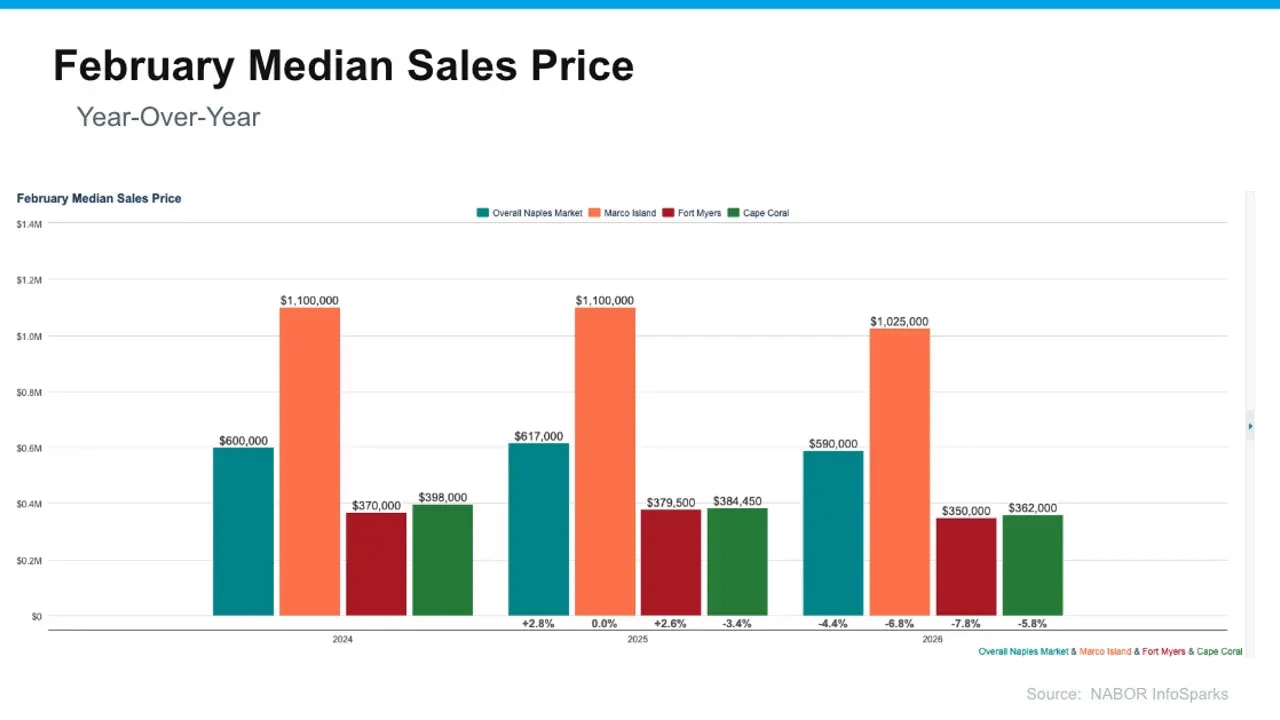
When people ask, “What is happening to home prices?” the answer is less dramatic than the fear-based narrative. The local takeaway discussed is that median sale prices feel steady overall, with some slight declines from last year depending on the area.
One practical reminder: medians vs averages can move differently, and a community-by-community “low sale comp” can distort the headline trend. That is why buyers and sellers should evaluate comps carefully instead of reacting to one-off data points.
Inventory and listings: fewer homes for sale changes the game
Supply matters. In February, the market had fewer homes for sale than a year ago (in the areas discussed), which is generally good for sellers because it reduces competition.
At the same time, listings were not flooding the market. New listings were down significantly compared to the prior year, and that helps explain why the market does not feel like a collapse.
On the buyer side, more selectivity can still exist, but it is happening within a supply constraint rather than a free-fall inventory situation.
Days on market and showings: a “normal” market is back
One of the most reassuring pieces of the update is how long homes take to sell compared to the extreme pace of the recent past.
Instead of “listed and gone,” the conversation included:
- Fort Myers: about 90 days average days on market
- Other areas: around 82 days average days on market (depending on the market referenced)
This is described as more normal. When the general public has been spoiled by rapid sales, longer timelines can feel scary. But for many neighborhoods, this is the natural rhythm that lets buyers make decisions without pressure panic.
Showings to pending also offered useful perspective, including an example range of roughly 10.8 to 12.2 showings to reach pending, depending on the area.
So, is it time to move?
The update ends with a deceptively simple question: should someone move?
The answer offered is yes, especially when the move is about lifestyle and long-term goals, not just trying to “time” the market perfectly. The real estate lesson is that market conditions change, but the value of living in Southwest Florida, building memories, and planning for the future does not have to wait.
If someone is thinking about buying, assistance with mortgage options and affordability planning can make the process clearer. If someone is thinking about selling, smart pricing, strategic negotiation, and proactive inspection planning can reduce the chances of deal friction.
In a market where headlines cause chaos but data supports steadiness, the best move is often the one that supports peace of mind.
FAQ
Is a recession coming that will crush the Southwest Florida real estate market?
The outlook discussed emphasizes that recession indicators like sustained GDP declines are not clearly pointing in that direction. Unemployment has been steady and near full employment, and inflation has been relatively stable. Real estate always has risks, but the “sky is falling” scenario is not supported by the data as presented.
Why are contract cancellations increasing if the market isn’t crashing?
Cancellations can rise when buyers become more selective and affordability and inspection outcomes get more scrutiny. Rising cancellations do not automatically mean the market is collapsing. It can also indicate buyers have more leverage and options compared to a sellers market.
Are mortgage rates improving or getting worse right now?
Mortgage rates can bounce due to short-term events, but the overall trend discussed has been downward compared to prior highs, helped by stabilized inflation. Even if rates tick up briefly, refinancing and buying decisions can still benefit from improved affordability conditions.
What should sellers do to reduce the risk of deals falling apart during inspection?
Consider proactive steps such as addressing obvious exterior and insurance-related issues, and be prepared for inspection concerns like wind and flood considerations, mold risk, and how certain cracks or exterior issues may be interpreted. Some sellers choose pre-listing inspections to reduce surprises, with the understanding that disclosures may become more formal.
Is the Southwest Florida real estate market still a good place to buy?
Based on the themes discussed, the market is not portrayed as declining. Median prices feel steadier overall, inventory is not exploding upward, and buyer activity has been increasing. The best approach is to buy with a realistic affordability plan and an inspection strategy, rather than relying on hope or fear.
Disclaimer: This article summarizes themes and data referenced in a market update and is for educational purposes only. Local results vary by neighborhood, property type, and individual financial factors.