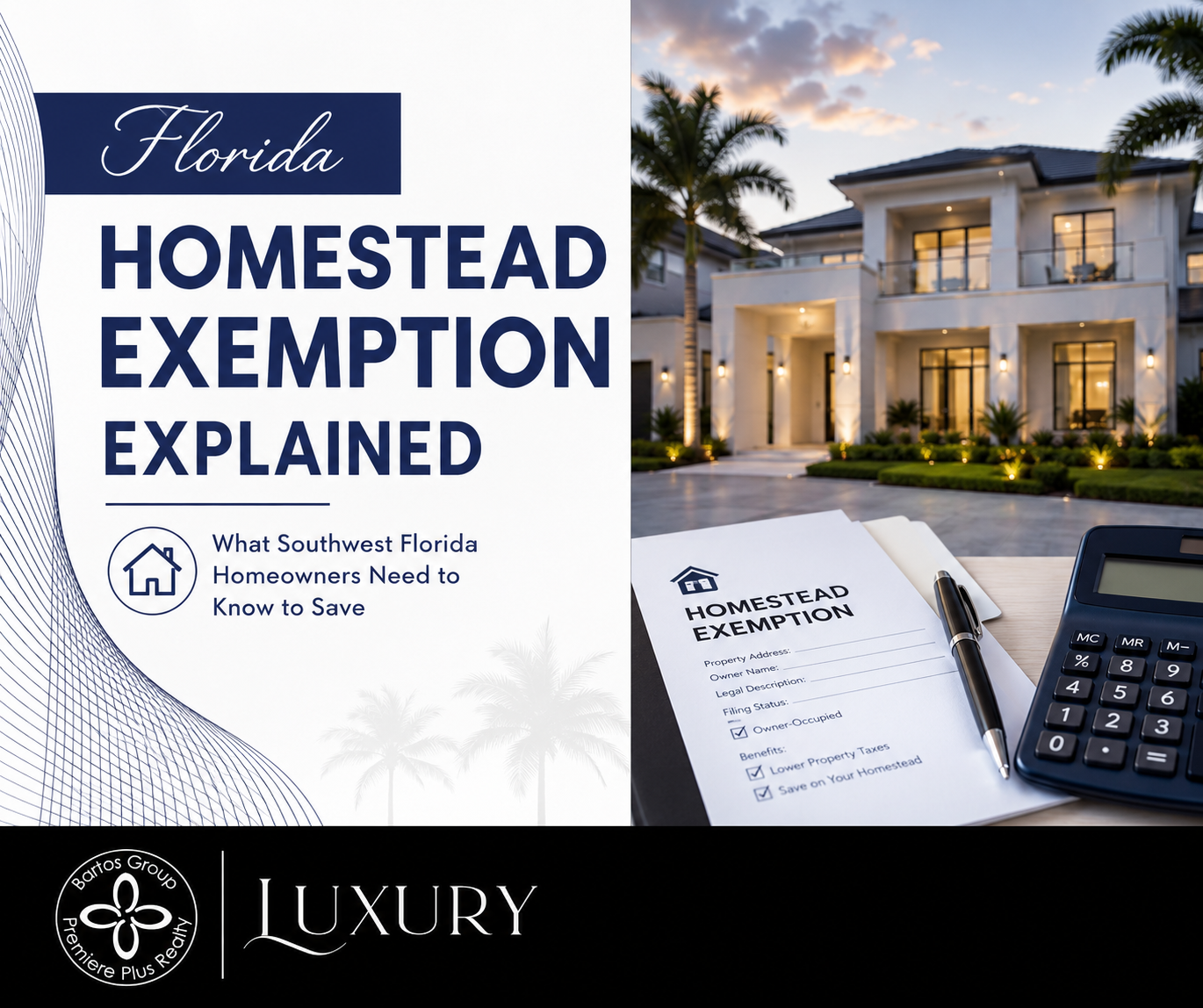
If you’re buying a primary residence in Florida, one of the most important tax benefits you should understand is the Florida Homestead Exemption.
For many homeowners relocating to Southwest Florida, this exemption can provide significant annual property tax savings while also helping protect long-term homeownership costs.
Whether you’re moving to Naples, Marco Island, Bonita Springs, Estero, Fort Myers, or Cape Coral, understanding how Florida Homestead Exemption works is extremely important before purchasing property.
Here’s a simple breakdown of what buyers and homeowners need to know in 2026.
Start Saving on Property Taxes With The Bartos Group
What Is the Florida Homestead Exemption?
The Florida Homestead Exemption is a property tax benefit available to homeowners who make a Florida property their permanent primary residence.
The exemption helps reduce the taxable value of a home, which can lower annual property taxes.
In addition to tax savings, Homestead Exemption also provides:
- Protection through Florida’s Save Our Homes cap
- Certain creditor protections under Florida law
- Potential portability benefits when moving within Florida
For many homeowners, this becomes one of the biggest financial advantages of establishing Florida residency.
How Much Does the Florida Homestead Exemption Save?
Florida homeowners may qualify for up to $50,000 in property tax exemptions on their primary residence.
Here’s how it generally works:
- The first $25,000 applies to all property taxes, including school taxes.
- The additional exemption up to $50,000 applies to non-school taxes for assessed values above $50,000.
While the exact savings vary depending on the home’s assessed value and local tax rates, many homeowners save hundreds to thousands of dollars annually.
Who Qualifies for Homestead Exemption in Florida?
To qualify for Florida Homestead Exemption, homeowners generally must:
- Own the property
- Use the property as their permanent primary residence
- Be a Florida resident
- Live in the home as of January 1 of the tax year being claimed
The exemption applies only to primary residences — not second homes, vacation homes, or investment properties.
This is especially important in Southwest Florida, where many buyers own seasonal or vacation properties.
Why Homestead Exemption Is So Important in Florida
For many relocation buyers, the biggest long-term advantage of Homestead Exemption is the Save Our Homes benefit.
Save Our Homes Cap
Once a property receives Homestead Exemption, Florida law limits how much the assessed value can increase each year for tax purposes.
This can help protect homeowners from dramatic tax increases as property values rise.
In fast-growing markets like Naples and Marco Island, this protection can become extremely valuable over time.
Even if market values increase significantly, the taxable assessed value may increase at a much slower pace for homesteaded properties.
What Is Portability?
Another major advantage for Florida homeowners is portability.
Portability allows eligible homeowners to transfer some of their Save Our Homes tax savings from one Florida homesteaded property to another when moving within the state.
For example:
- A homeowner selling a primary residence in Fort Myers and purchasing another primary home in Naples may be able to transfer part of their accumulated tax benefit.
This can help homeowners maintain lower property taxes when relocating within Florida.
Portability rules can be complex, so working with knowledgeable local professionals is important during the process.
Start Saving on Property Taxes With The Bartos Group
Common Misconceptions About Homestead Exemption
“I Automatically Get It When I Buy a House”
One of the biggest misconceptions is assuming Homestead Exemption happens automatically.
In most cases, homeowners must apply through their county property appraiser’s office.
“It Applies to Vacation Homes”
Homestead Exemption only applies to primary residences.
Because Southwest Florida has many second-home and seasonal buyers, this is a common point of confusion.
“It Eliminates Property Taxes”
Homestead Exemption reduces taxable value, but homeowners still pay property taxes.
The amount saved depends on:
- Assessed property value
- Local tax rates
- Exemption amounts
- Additional exemptions that may apply
When Should Homeowners Apply?
Homeowners typically apply for Homestead Exemption after purchasing their primary residence and establishing Florida residency.
Most counties have filing deadlines tied to the tax year.
Because deadlines and requirements can vary slightly, buyers should confirm details directly with their local property appraiser’s office after closing.
Additional Florida Property Tax Exemptions
In addition to standard Homestead Exemption, some homeowners may qualify for additional exemptions, including:
- Senior exemptions
- Veteran exemptions
- Disability exemptions
- Widow/widower exemptions
Eligibility requirements vary depending on the exemption type and county guidelines.
Why This Matters for Southwest Florida Buyers
Homestead Exemption is especially important in Southwest Florida because of the region’s continued real estate growth.
As home values rise throughout areas like Naples, Marco Island, Bonita Springs, Estero, Fort Myers, and Cape Coral, property tax planning becomes an increasingly important part of long-term homeownership.
Buyers relocating from out of state are often unfamiliar with how Florida’s property tax system works, making education and planning essential during the home-buying process.
Things Buyers Should Consider Before Claiming Florida Residency
Many relocation buyers moving full-time to Florida should also consider:
- Driver’s license updates
- Vehicle registration
- Voter registration
- Tax residency documentation
- Estate planning implications
Establishing Florida residency often involves more than simply purchasing property.
Because Florida offers no state income tax, residency requirements can become especially important for buyers relocating from high-tax states.
Final Thoughts: Why Florida Homestead Exemption Matters
For many homeowners, Florida Homestead Exemption is one of the most valuable financial benefits of owning a primary residence in Florida.
The combination of property tax savings, Save Our Homes protection, portability opportunities, and long-term tax advantages can create meaningful long-term value for Florida homeowners.
As more buyers relocate to Southwest Florida in 2026, understanding Homestead Exemption has become an important part of making informed real estate decisions.
Whether you’re purchasing a waterfront home in Marco Island, a golf community residence in Naples, or a family home in Fort Myers, understanding Florida property tax benefits can help you plan more confidently for the future.
If you’re considering buying, selling, investing, or relocating to Southwest Florida, the team at The Bartos Group is ready to help you navigate the market with trusted local expertise and personalized guidance.
Start Saving on Property Taxes With The Bartos Group
FAQ
What is the Florida Homestead Exemption?
The Florida Homestead Exemption is a property tax benefit that reduces the taxable value of a primary residence for eligible Florida homeowners. It can provide up to $50,000 in exemptions and includes additional protections like the Save Our Homes cap and portability benefits.
How much does Florida Homestead Exemption save homeowners?
Savings vary depending on the property’s assessed value and local tax rates. Many homeowners save hundreds to thousands of dollars annually. The first $25,000 exemption applies to all property taxes including school taxes, while the second $25,000 applies to non-school taxes for values above $50,000.
Who qualifies for Homestead Exemption in Florida?
To qualify, homeowners must own the property, use it as their permanent primary residence, be a Florida resident, and be living in the home as of January 1 of the tax year being claimed. It does not apply to vacation homes, second homes, or investment properties.
What is the Save Our Homes cap?
Save Our Homes is a Florida law that limits how much a homesteaded property’s assessed value can increase each year for tax purposes. This protects homeowners from dramatic property tax increases even as market values rise — especially valuable in growing markets like Naples and Marco Island.
Do I automatically get Homestead Exemption when I buy a home in Florida?
No. Homeowners must apply for Homestead Exemption through their county property appraiser’s office after purchasing their primary residence and establishing Florida residency. Filing deadlines vary by county, so confirming requirements after closing is important.