
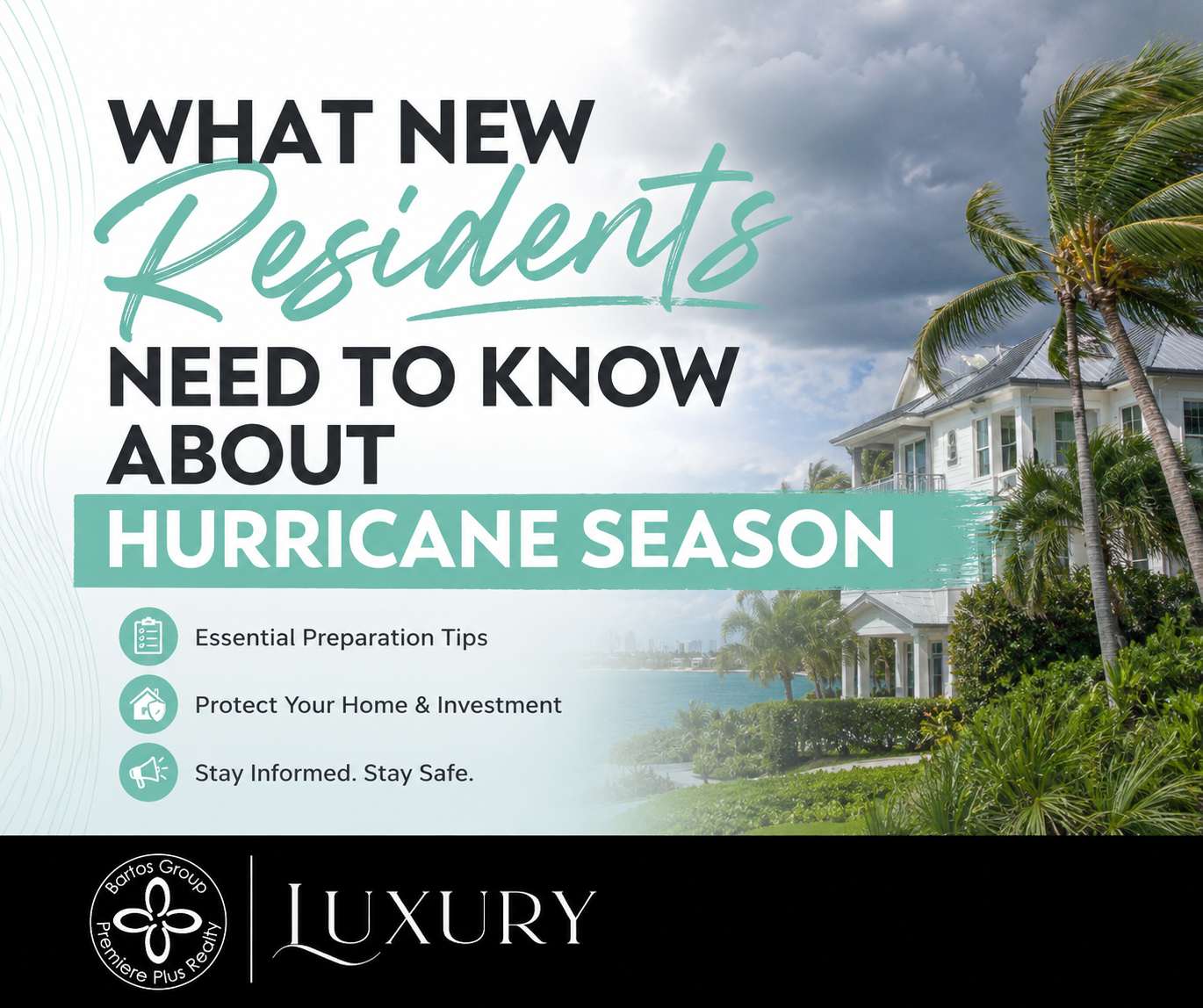
For many people relocating to Florida, living near the beach, boating year-round, and enjoying endless sunshine feels like a dream come true. But if you’re moving to Southwest Florida for the first time, there’s one important reality every new resident needs to understand: hurricane season.
The good news? Longtime Florida residents are incredibly familiar with preparing for storms, and modern forecasting technology gives homeowners far more warning and preparation time than many people expect.
Whether you’re relocating to Naples, Marco Island, Bonita Springs, Estero, Fort Myers, or Cape Coral, understanding hurricane season is simply part of becoming a Florida homeowner.
Here’s what new residents should know before living in Southwest Florida full time.
Move to Paradise, Not Panic — The Bartos Group Has You Covered
Hurricane Season Runs From June Through November
Florida hurricane season officially runs from June 1 through November 30 each year.
However, the peak of hurricane season typically occurs between:
- August
- September
- October
This does not mean hurricanes are constantly happening throughout the season. In reality, many storms never impact Southwest Florida directly.
Still, residents should always remain prepared during these months.
One thing new residents quickly learn is that locals take storm preparation seriously — but they also don’t panic every time a storm appears in the forecast.
Preparation and awareness are simply part of coastal living.
Not Every Storm Becomes a Major Hurricane
One common misconception among people relocating to Florida is assuming every tropical system becomes catastrophic.
In reality, tropical systems vary significantly and may include:
- Tropical depressions
- Tropical storms
- Category 1–5 hurricanes
Some storms bring mostly rain and wind, while others can become much more serious depending on their path, intensity, and local conditions.
Longtime Southwest Florida residents learn to monitor storms carefully without overreacting too early.
Flood Zones Matter More Than Many Buyers Realize
One of the most important things buyers should understand before purchasing property in Southwest Florida is flood zones.
Flood zone designation can impact:
- Flood insurance requirements
- Insurance costs
- Building requirements
- Future resale considerations
Properties located directly on the water or in lower elevation areas may carry different flood risks than inland or elevated homes.
This is especially important in waterfront markets like Marco Island, Naples, and Cape Coral.
However, flood zones vary significantly even within the same city or neighborhood.
Working with experienced local professionals is extremely important when evaluating property location, elevation, and insurance considerations.
Hurricane Protection Features Are a Big Deal
Many Southwest Florida homes include features specifically designed for storm protection.
When buying a home, new residents should pay attention to:
- Impact-resistant windows and doors
- Hurricane shutters
- Roof age and condition
- Elevation
- Garage door ratings
- Generator capability
Newer construction homes often include updated building standards and storm-resistant materials that many relocation buyers find reassuring.
These features can also influence insurance costs and homeowner confidence during storm season.
Insurance Is a Major Part of Florida Homeownership
Insurance works differently in Florida than it does in many other states.
New residents should expect to review:
- Homeowners insurance
- Flood insurance
- Windstorm coverage
- Deductibles
- Roof requirements
Insurance costs can vary dramatically depending on:
- Property age
- Roof condition
- Flood zone
- Waterfront exposure
- Construction quality
One of the biggest mistakes relocation buyers make is focusing only on home price without fully evaluating long-term insurance costs.
Understanding insurance upfront is critical before purchasing property in Southwest Florida.
Move to Paradise, Not Panic — The Bartos Group Has You Covered
Preparation Is Part of the Florida Lifestyle
One thing many new residents notice quickly is how normal hurricane preparation feels to locals.
Before storms approach, residents often:
- Stock up on water and groceries
- Charge electronics
- Prepare generators
- Secure outdoor furniture
- Fuel vehicles and boats
- Review evacuation plans if needed
Preparedness becomes routine rather than stressful.
Most experienced Florida homeowners maintain basic hurricane supplies throughout the season so they aren’t scrambling at the last minute.
Evacuation Zones Are Different From Flood Zones
Another common misunderstanding is assuming flood zones and evacuation zones are the same thing.
They are not.
Evacuation zones are determined by local emergency management agencies and help guide residents during storm threats.
Some waterfront or low-lying areas may receive evacuation orders depending on storm conditions.
New residents should:
- Know their evacuation zone
- Understand local emergency routes
- Have a basic storm plan
- Stay informed during hurricane season
This is especially important for coastal and barrier island communities.
Hurricane Season Doesn’t Stop People From Moving Here
Despite hurricane season, people continue relocating to Southwest Florida in record numbers.
Why? Because the lifestyle benefits still outweigh the risks for many buyers.
Residents continue choosing Southwest Florida for:
- Waterfront living
- Beaches and boating
- Warm weather
- Luxury communities
- Outdoor lifestyle
- Tax advantages
- Quality of life
For many homeowners, hurricane preparedness simply becomes part of living in a coastal paradise.
Remote Work Has Made Storm Flexibility Easier
Remote and hybrid work have also changed how many residents approach storm season.
Some homeowners now have more flexibility to:
- Temporarily relocate during storms
- Work remotely from other locations
- Maintain seasonal homes more easily
This flexibility has helped many buyers feel more comfortable relocating to Florida full time.
New Residents Often Adjust Faster Than They Expect
Many buyers moving from out of state initially feel nervous about hurricane season.
But after living through their first Florida season, most residents realize:
- Forecasting technology is highly advanced
- Communities are well-prepared
- Storm preparation becomes routine
- Not every storm directly impacts their area
Over time, most homeowners become much more confident and comfortable navigating Florida weather patterns.
Final Thoughts: Living in Southwest Florida Means Being Prepared, Not Fearful
Hurricane season is a reality of living in Florida, but for most residents, it’s simply part of coastal life — much like snowstorms are part of living in northern states.
The key is preparation, education, and working with experienced local professionals who understand the region.
For many buyers, the incredible benefits of Southwest Florida living — boating, beaches, waterfront homes, luxury lifestyle, sunshine, and outdoor living year-round — far outweigh the seasonal challenges.
Whether you’re considering a waterfront home in Marco Island, a golf community in Naples, or a family neighborhood in Fort Myers or Cape Coral, understanding hurricane season helps you make smarter and more confident real estate decisions.
If you’re considering buying, selling, investing, or relocating to Southwest Florida, the team at The Bartos Group is ready to help you navigate the market with trusted local expertise and personalized guidance.
Move to Paradise, Not Panic — The Bartos Group Has You Covered
FAQ
When is hurricane season in Southwest Florida?
Florida hurricane season officially runs from June 1 through November 30. The peak months are typically August, September, and October. However, many tropical systems never directly impact Southwest Florida, and modern forecasting gives residents significant advance warning and preparation time.
How do I know if my Southwest Florida home is in a flood zone?
Flood zone designations are determined by FEMA and can be found through official flood maps or your county property appraiser’s office. Flood zones vary significantly even within the same neighborhood. Working with a knowledgeable local real estate team and insurance agent is the best way to evaluate flood risk before purchasing.
Is hurricane insurance required in Southwest Florida?
Homeowners insurance is typically required by lenders. Flood insurance requirements depend on your flood zone designation. Windstorm coverage is an important additional consideration for many coastal properties. Insurance requirements and costs vary significantly based on property age, roof condition, location, and waterfront exposure.
What hurricane protection features should I look for in a Southwest Florida home?
Key features include impact-resistant windows and doors, hurricane shutters, newer roof with good condition, elevated construction, hurricane-rated garage doors, and generator capability. Newer construction homes typically include updated storm-resistant building standards that many buyers find reassuring.
Do most people stay or evacuate during hurricanes in Southwest Florida?
It depends on the storm’s projected path, intensity, and each resident’s specific evacuation zone. Residents in certain coastal or low-lying evacuation zones may receive official evacuation orders for stronger storms. Most experienced Florida residents prepare thoroughly and follow local emergency management guidance during hurricane season.